




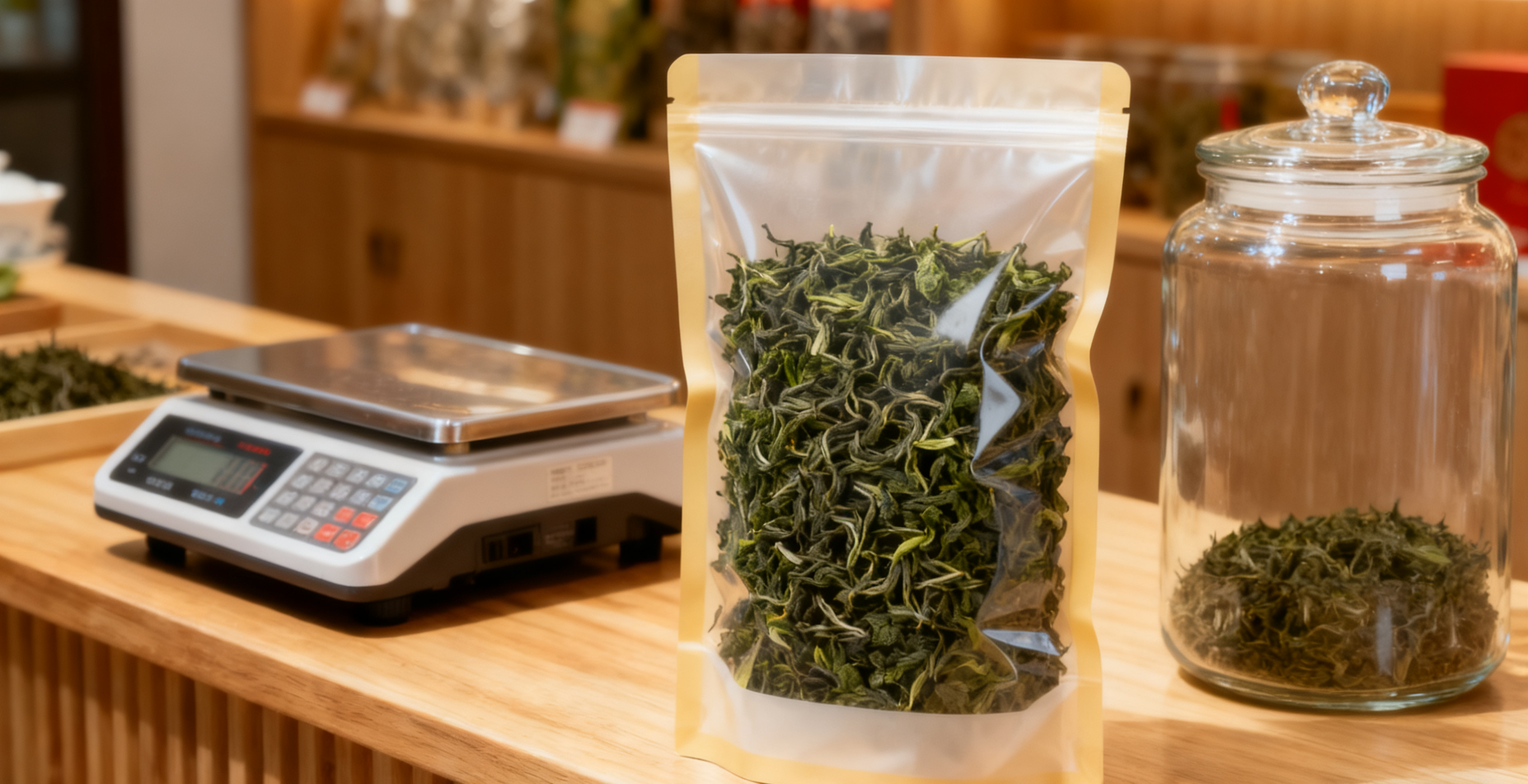
Tea, as a delicate agricultural product, is highly sensitive to external factors such as moisture, oxygen, light, and odor during storage and transportation. The right packaging not only preserves the tea's aroma, flavor, and nutritional value but also enhances its market appeal. This article focuses on three core aspects of tea packaging selection: the requirements of tea for packaging, available bag types, and suitable material combinations.
1. Requirements of Tea for Packaging
Requirement Category | Specific Description | Key Function |
Moisture Resistance | Packaging must block external moisture from penetrating; the internal moisture content of tea should be maintained at 3%-7% | Prevent tea from getting damp, moldy, or losing its crispness |
Oxygen Barrier | Minimize oxygen permeability to slow down the oxidation of tea polyphenols, amino acids, and other active ingredients | Avoid tea aging, discoloration, and loss of fresh flavor |
Lightproof Property | Block ultraviolet and visible light to reduce photochemical reactions in tea | Preserve the original color, aroma, and taste of tea (especially for green tea and white tea) |
Odorlessness | Packaging materials should not release harmful or peculiar odors; they should also prevent tea from absorbing external odors | Ensure tea retains its unique natural aroma without contamination |
Air Tightness | Provide reliable sealing to avoid air leakage after packaging and repeated opening | Maintain a stable internal environment and extend the shelf life |
Safety Compliance | Materials must meet food-grade standards, free of heavy metals, harmful plasticizers, or residual solvents | Ensure tea safety for human consumption |
Printability | Surface should be suitable for printing product information (e.g., origin, grade, production date) and brand logos | Improve product recognition and market competitiveness |
2. Available Bag Types for Tea Packaging
2.1 Stand-Up Pouches
Features: With a bottom gusset, they can stand upright independently, saving storage space and facilitating display on shelves. Most are equipped with resealable zippers for repeated use.
Applicable Scenarios: Suitable for middle-to-high-end tea products such as oolong tea, black tea, and herbal tea. Ideal for consumers who need to store tea for a long time and open/close the package frequently.
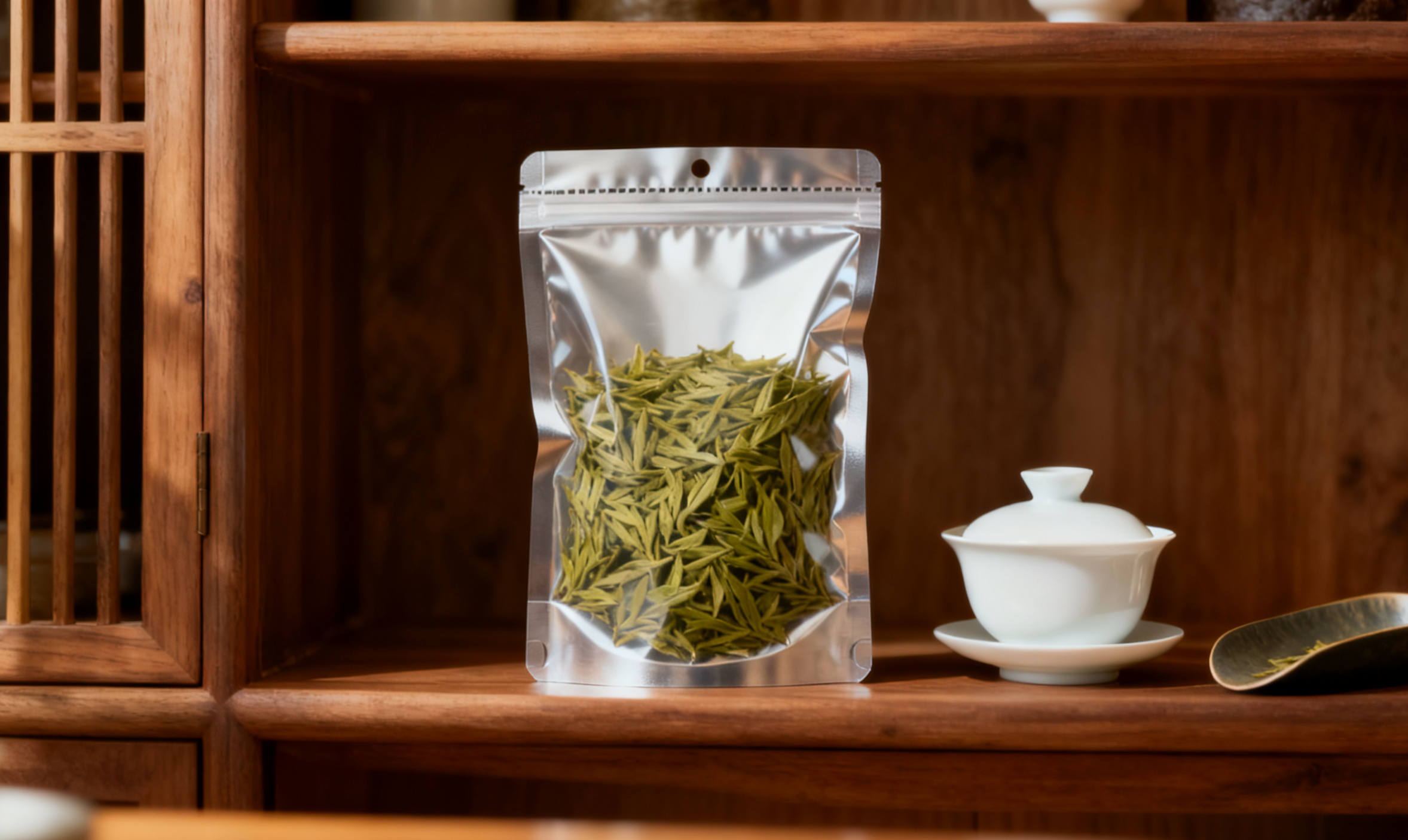
2.2 Three-Side Sealed Bags
Features: Simple structure, cost-effective, and available in various sizes. The three sealed edges ensure basic air tightness and moisture resistance.
Applicable Scenarios: Widely used for bulk tea, sample packaging, or low-to-medium priced tea products like green tea and jasmine tea.
Features: More stable in standing than stand-up pouches, with better load-bearing capacity. The multi-layer sealing design enhances barrier performance.
Applicable Scenarios: Suitable for high-quality tea with large packaging volumes (e.g., 500g-1kg), such as Pu-erh tea cakes, aged white tea, and premium black tea.
2.4 Vacuum Bags
Features: Remove air inside the bag to minimize oxidation and moisture absorption. Usually paired with aluminum foil or high-barrier films.
Applicable Scenarios: Perfect for fragile tea leaves (e.g., dragon well tea, biluochun) and tea products that require long-term preservation (over 1 year).
3. Suitable Material Combinations for Tea Packaging
The selection of packaging materials depends on the tea’s characteristics (e.g., oxidation sensitivity, storage period) and the bag type. Below are common high-performance material combinations:
3.1 PET/AL/PE (Polyethylene Terephthalate/Aluminum Foil/Polyethylene)
Advantages: Excellent oxygen barrier, moisture resistance, and lightproof property. Aluminum foil blocks 100% of light and oxygen, while PE ensures good sealing and heat-sealing performance.
Applicable Tea Types: Green tea, white tea, and other oxidation-sensitive teas; suitable for stand-up pouches, three-side sealed bags, and vacuum bags.
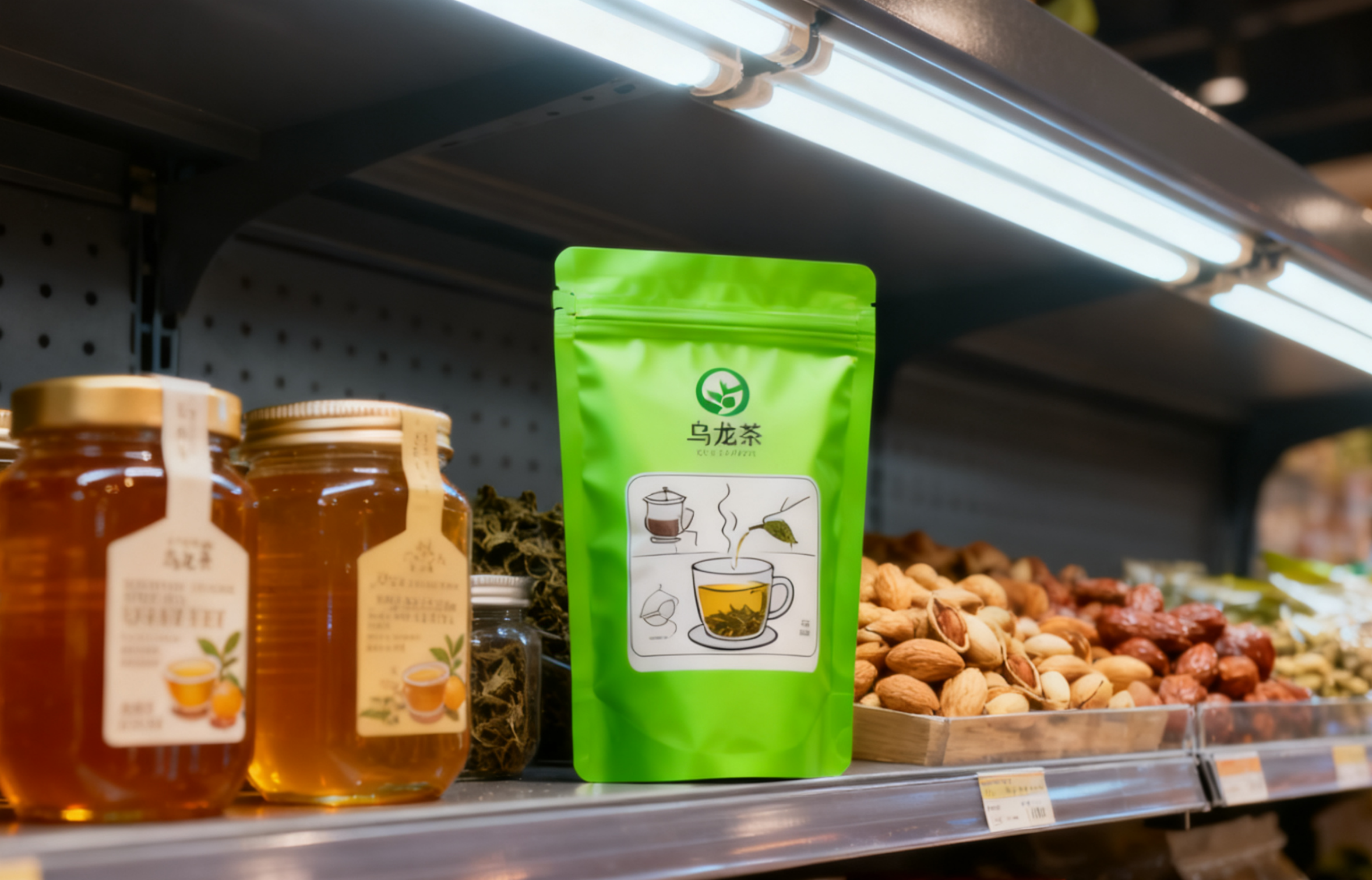
3.2 PET/VMPET/PE (Polyethylene Terephthalate/Metallized PET/Polyethylene)
Advantages: Similar barrier performance to PET/AL/PE but lighter and more cost-effective. Metallized PET provides good lightproof and oxygen-blocking effects.
Applicable Tea Types: Black tea, oolong tea, and jasmine tea; ideal for stand-up pouches and eight-side sealed bags.
3.3 NY/PE (Nylon/Polyethylene)
Advantages: High tensile strength, puncture resistance, and good moisture resistance. Nylon enhances the bag's durability, while PE ensures tight sealing.
Applicable Tea Types: Tea with hard textures or tea (e.g., tieguanyin, dahongpao) and vacuum-packed tea; suitable for vacuum bags and heavy-duty three-side sealed bags.
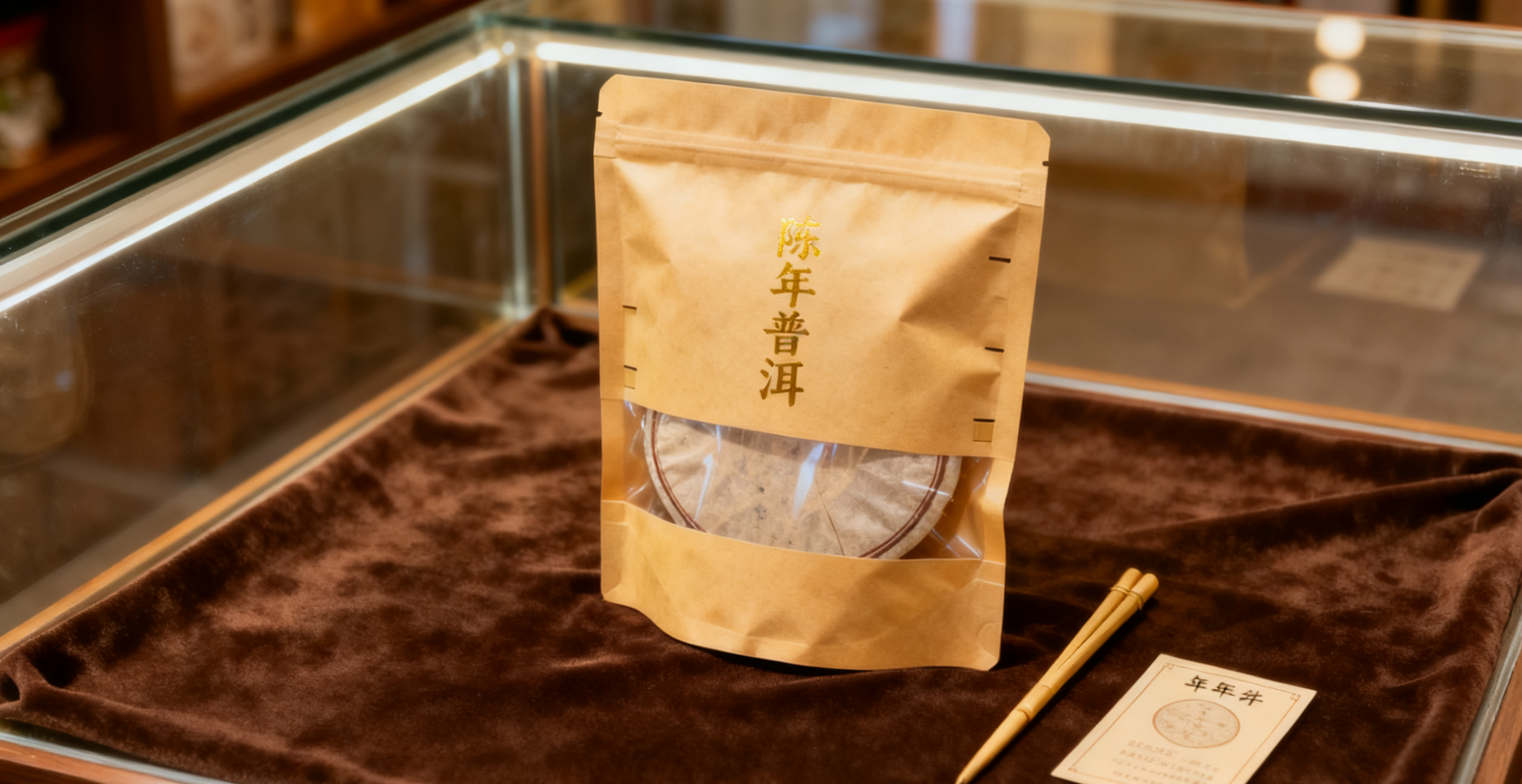
3.4 Kraft Paper/PET/PE (Kraft Paper/Polyethylene Terephthalate/Polyethylene)
Advantages: Eco-friendly and visually appealing with a natural texture. Kraft paper provides mechanical protection, while PET and PE offer moisture and oxygen barrier.
Applicable Tea Types: Pu-erh tea, aged tea, and traditional Chinese tea; suitable for stand-up pouches and gift packaging.
3.5 Filter Paper/Non-Woven Fabric (for Tea Bags)
Advantages: Food-grade, breathable, and biodegradable. Non-woven fabric has better tensile strength, while filter paper offers faster brewing speed.
Applicable Tea Types: Single-serve tea bags (e.g., black tea bags, chrysanthemum tea bags).
Conclusion
Selecting the right tea packaging requires a comprehensive consideration of tea's sensitivity to environmental factors, storage conditions, and usage scenarios. By prioritizing core requirements such as moisture resistance, oxygen barrier, and lightproof property, choosing appropriate bag types (e.g., stand-up pouches for display, vacuum bags for long-term storage), and adopting suitable material combinations, tea producers can effectively preserve the tea's quality and enhance its market value. Ultimately, the best packaging is one that balances functionality, cost-effectiveness, and consumer experience.
