




Luxury skincare and beauty brands live or die by first impressions. Before a customer ever swatches a lipstick or smells a serum, they judge the product by its exterior. That single moment of visual contact can decide whether a shopper reaches for your item or walks past it entirely.
This is where thoughtful packaging design earns its place as a core brand asset rather than an afterthought. A well-designed exterior signals quality, builds trust, and gives customers a reason to choose your product over a nearly identical competitor sitting on the same shelf. Cosmetic packaging bags, in particular, offer beauty brands a flexible, cost-conscious way to deliver that premium feel without the rigid constraints of boxes or jars.
This guide breaks down the design elements that separate forgettable packaging from packaging that sells, from material selection to finishing techniques, and explains how to choose a manufacturing partner capable of bringing that vision to life.
The Role of Packaging in Luxury Cosmetic Branding
Luxury is a feeling communicated through texture, weight, sound, and visual detail. A soft-touch matte finish, a satisfying resealable zip, or a subtle metallic sheen all contribute to a sense of quality before the product inside is even used. Beauty consumers increasingly associate thoughtful exteriors with thoughtful formulas, which makes packaging a direct extension of product credibility.
For emerging and established beauty brands alike, packaging also serves a practical marketing function. Unboxing content shared across social platforms turns packaging into free advertising, meaning every design decision has a ripple effect on brand visibility.
Design Elements That Define Premium Packaging
Material Choices for a Premium Feel
The material you choose sets the tone for everything else. Metallized films offer a mirror-like shine associated with high-end fragrance and skincare lines, while kraft paper laminates lean into an earthy, clean-beauty aesthetic. Matte soft-touch films, meanwhile, have become a signature choice for minimalist, Scandinavian-inspired brands because they feel refined to the touch and photograph well under studio lighting.
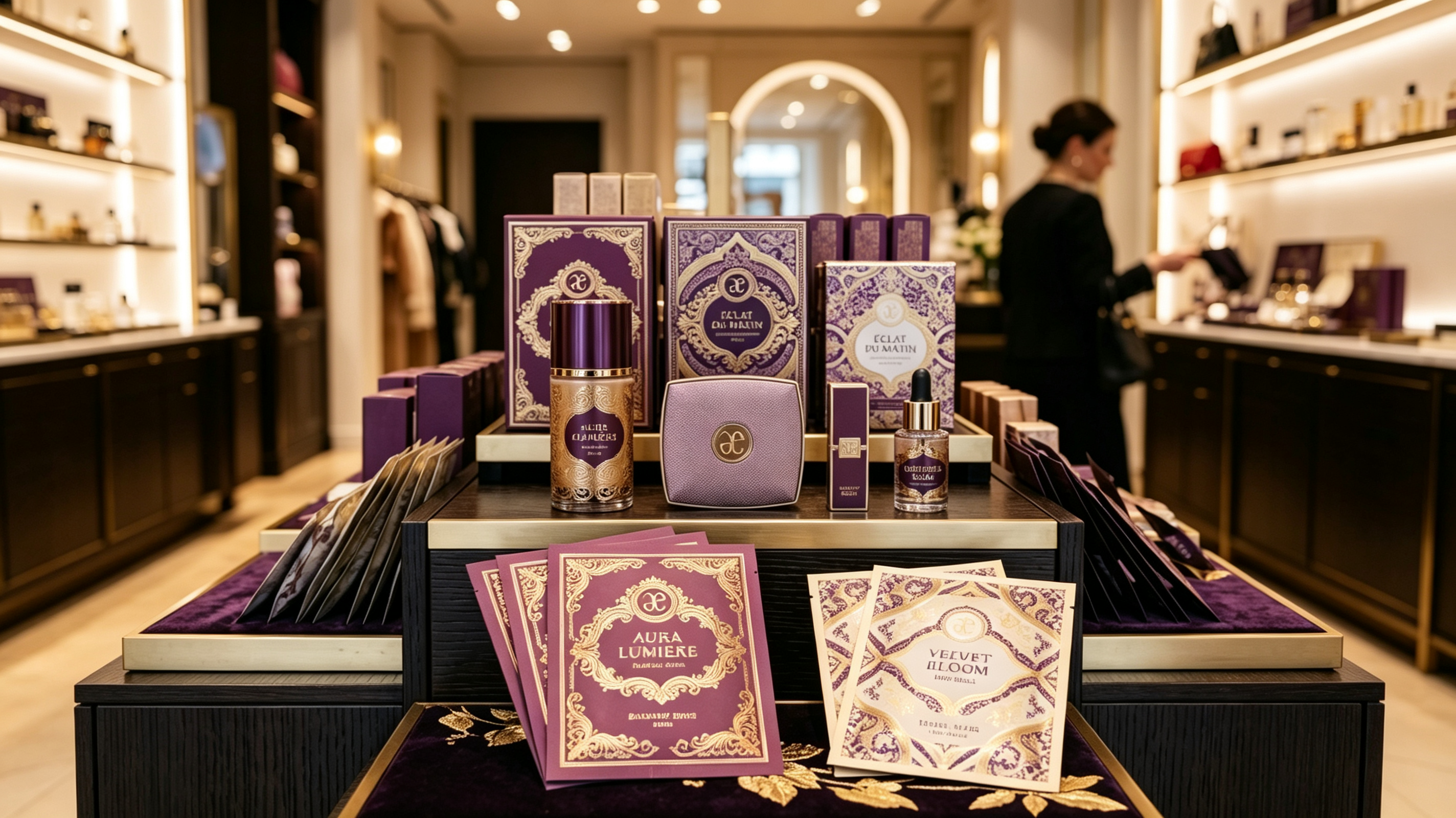
Smaller formats matter too. A single-use makeup sachet is often the first physical touchpoint a customer has with a new brand, whether through a subscription box, a magazine insert, or a retail sample counter. Even at this small scale, print quality and material finish shape how premium the brand feels.
Color, Finish, and Typography
Color psychology plays a heavier role in cosmetics than in almost any other retail category. Deep jewel tones and matte black suggest luxury and exclusivity, while soft pastels and pearlescent finishes lean into a more approachable, youthful identity. Foil stamping, embossing, and spot UV coating add tactile depth that flat printing simply cannot replicate.
Cosmetic packages that pair a restrained color palette with one standout finishing technique, such as a single gold foil logo on a matte black bag, tend to photograph better and feel more expensive than designs that try to combine multiple effects at once. Restraint, more than complexity, is usually what separates premium design from cluttered design.
Comparing Popular Packaging Materials
Material | Best For | Key Benefit | Shelf Appeal |
|---|---|---|---|
Metallized film | Fragrance, skincare sets | Reflective, high-shine finish | High |
Kraft paper laminate | Clean beauty, natural brands | Eco-conscious appearance | Medium-High |
Matte soft-touch film | Minimalist, modern brands | Tactile, fingerprint-resistant surface | High |
Clear/transparent film | Color cosmetics, lip products | Product visibility | Medium |
Recyclable mono-material film | Sustainability-focused brands | Simplified end-of-life recycling | Medium-High |
Choose metallized film if shelf-standout matters most; choose kraft paper laminate if your brand story centers on sustainability; choose matte soft-touch film if a tactile, modern aesthetic is the priority.

How Small Details Create Big Brand Impact
Resealable zippers, tear notches, and easy-open features are functional details that also communicate quality. A customer who struggles to open a package will associate that frustration with the brand itself, regardless of how good the product inside actually is. Consistent print registration and color accuracy across production runs matter just as much: a slightly off shade of pink on one batch of cosmetic packaging bags can undercut months of careful brand-building.
Sustainability messaging has also become a design detail in its own right. Recyclability symbols, material breakdowns, and refill instructions printed directly on the packaging give environmentally conscious shoppers a reason to trust the brand further.
Choosing the Right Manufacturing Partner
Design vision only becomes reality with the right production partner. Look for a manufacturer with in-house printing, lamination, and bag-making capabilities, since outsourcing these steps separately increases both cost and the risk of inconsistent quality. Ask about minimum order quantities, turnaround times, and whether the manufacturer can produce sample runs before committing to a full production order.
Suppliers such as Maixin Packaging (www.maixinpackingtech.com), a Zhongshan, China-based manufacturer specializing in custom bag and film production, illustrate what to look for in a production partner: multiple printing and lamination lines under one roof, dedicated quality inspection equipment, and experience across cosmetic, food, and chemical packaging categories. That kind of cross-category experience often translates into more reliable material sourcing and fewer production surprises.
Turning Packaging Into a Brand Asset
Packaging decisions carry more weight in the beauty industry than in almost any other consumer category, because the exterior often communicates quality before the formula ever gets a chance to prove itself. Brands that treat material selection, finishing techniques, and manufacturing partnerships as core design decisions, rather than final-stage logistics, consistently build stronger shelf presence and customer loyalty.
Every choice, from the finish on a bag to the reliability of a production partner, adds up to how a customer perceives the brand long before the product itself is tested.
Frequently Asked Questions
What size cosmetic packaging bag works best for sample kits?
Small-format pouches under 10cm in width are typically used for makeup sachet-style samples, since they minimize material use while still allowing for a printed logo and basic product information.
How long does custom packaging production usually take?
Timelines vary by manufacturer and order complexity, but custom printed pouches generally require an initial sample approval stage before full production begins. Confirm this timeline directly with your chosen supplier.
Is sustainable packaging more expensive than standard materials?
Recyclable mono-material films and kraft paper laminates can carry a higher per-unit material cost than conventional multi-layer films, though pricing depends heavily on order volume and supplier.
Can one packaging design work across an entire product line?
Yes, provided the design system includes flexible elements like a consistent color palette and logo placement. This allows variations in size or finish without losing brand recognition.
What is the main risk of choosing packaging on price alone?
Prioritizing the lowest per-unit cost often leads to inconsistent print quality or weaker seal integrity, both of which can damage the unboxing experience and, ultimately, repeat purchase rates.
