




In the booming pet care market, the packaging of pet food plays a crucial role not only in protecting the quality of the food but also in enhancing user experience and brand image. Among various packaging options, the flat bottom bag stands out as the optimal choice for pet food packaging. Its unique design, outstanding advantages, and compatible materials make it irreplaceable in the industry.
Distinctive Features of Flat Bottom Bags
The flat bottom bag is characterized by its innovative structural design. As the name suggests, it has a flat and stable bottom that allows the bag to stand firmly on any flat surface without additional support. This is a significant difference from traditional side gusset bags or pillow bags, which often lack stability and tend to tip over easily.
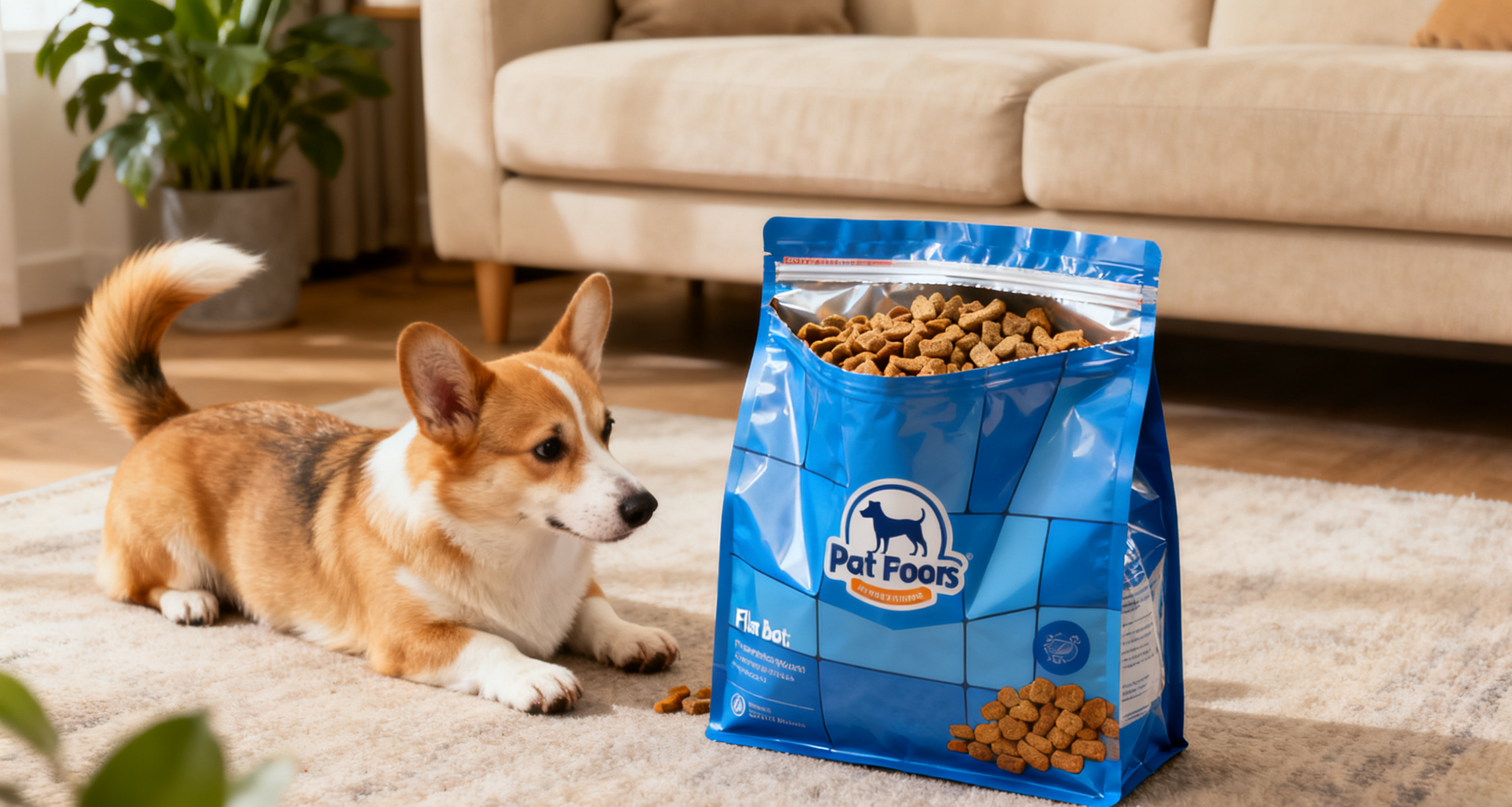
Another notable feature is its multi-panel structure. Typically composed of a front panel, back panel, two side gussets, and a bottom panel, this design provides ample space for printing and information display. The side gussets can expand flexibly, enabling the bag to hold different quantities of pet food, from small packages of a few hundred grams to large ones of several kilograms.
Additionally, flat bottom bags are equipped with advanced sealing systems. Most of them adopt heat-sealing technology combined with zippers, which ensures tight sealing and convenient opening and closing. Some high-end models also come with tear notches, making it easier for pet owners to open the bag without using scissors.
Outstanding Advantages of Flat Bottom Bags
The structural features of flat bottom bags bring a series of practical advantages. Firstly, the stable standing performance facilitates storage and display. For pet owners, they can easily place the bag in the pantry, cabinet, or even on the floor without worrying about it tipping over and causing food spillage. For retailers, the upright display of flat bottom bags can effectively attract customers' attention on the shelves and improve the visibility of the product.
Secondly, the excellent sealing performance effectively extends the shelf life of pet food. Pet food, especially dry kibble, is prone to moisture absorption and oxidation, which can affect its taste and nutritional value. The tight sealing of flat bottom bags can isolate air, moisture, and dust, keeping the food dry and fresh for a long time.
Moreover, the flat bottom bag offers superior branding and information communication effects. The large and flat printing area on the front and back panels allows brands to display logos, product images, and detailed information (such as ingredients, nutritional values, feeding suggestions) clearly and attractively. This helps consumers understand the product better and enhances brand recognition and trust.
In terms of portability, the flat bottom bag also performs well. It can be designed with a handle, making it easy for pet owners to carry when purchasing or traveling. When not in use, it can be folded flat, saving storage space.
Suitable Materials for Pet Food Flat Bottom Bags
Choosing the right material is essential to maximize the performance of flat bottom bags for pet food. The materials need to meet the requirements of food safety, barrier properties, durability, and printability.
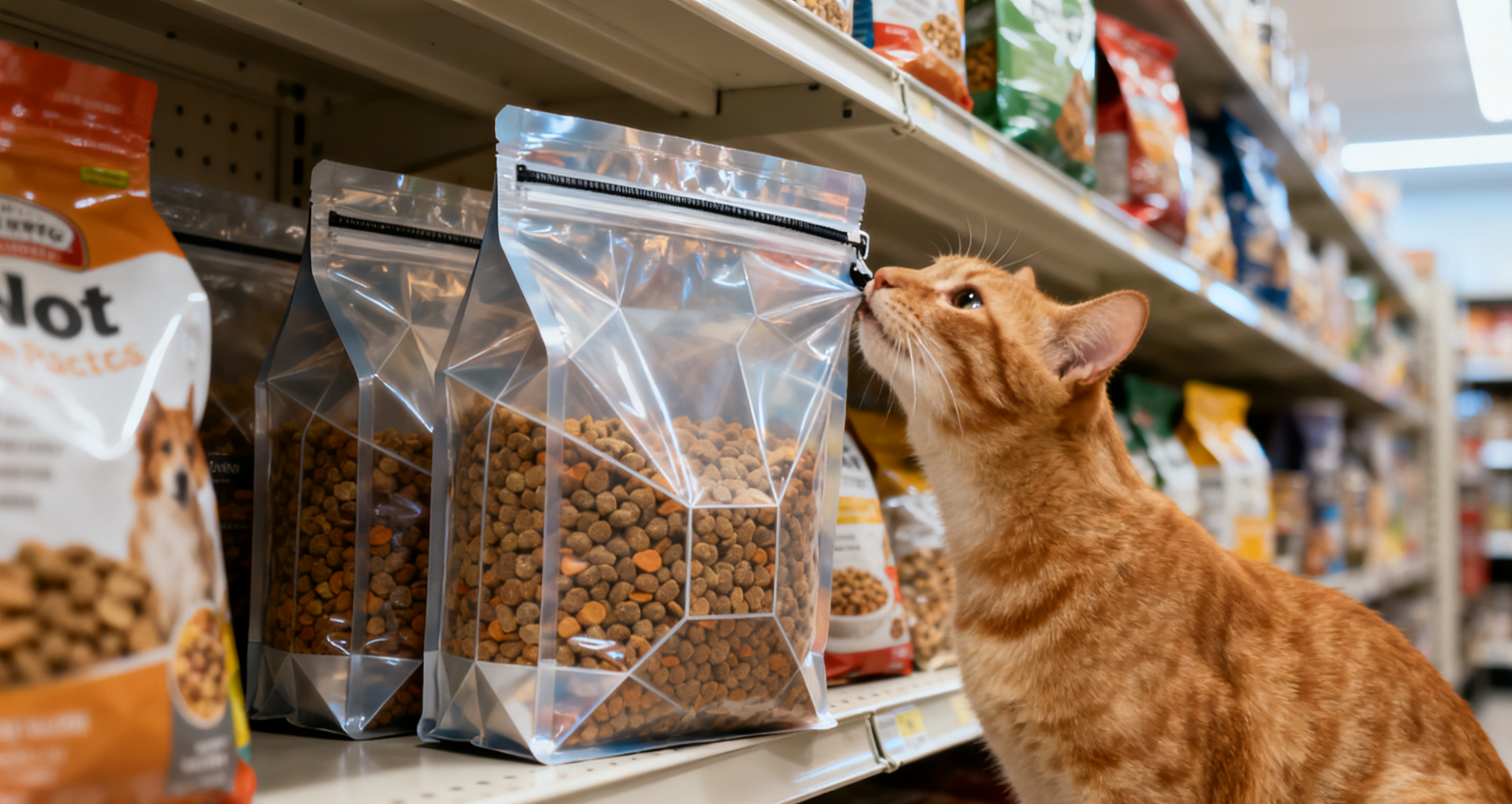
PET/PE: One of the most commonly used materials is composite plastic film. PET (Polyethylene Terephthalate) combined with PE (Polyethylene) is a classic combination. PET has excellent mechanical strength, transparency, and printability, which can showcase the product's appearance and brand information well. PE has good heat-sealing performance and flexibility, ensuring the bag is tightly sealed and easy to process. This composite material also has certain barrier properties against air and moisture, suitable for general dry pet food.
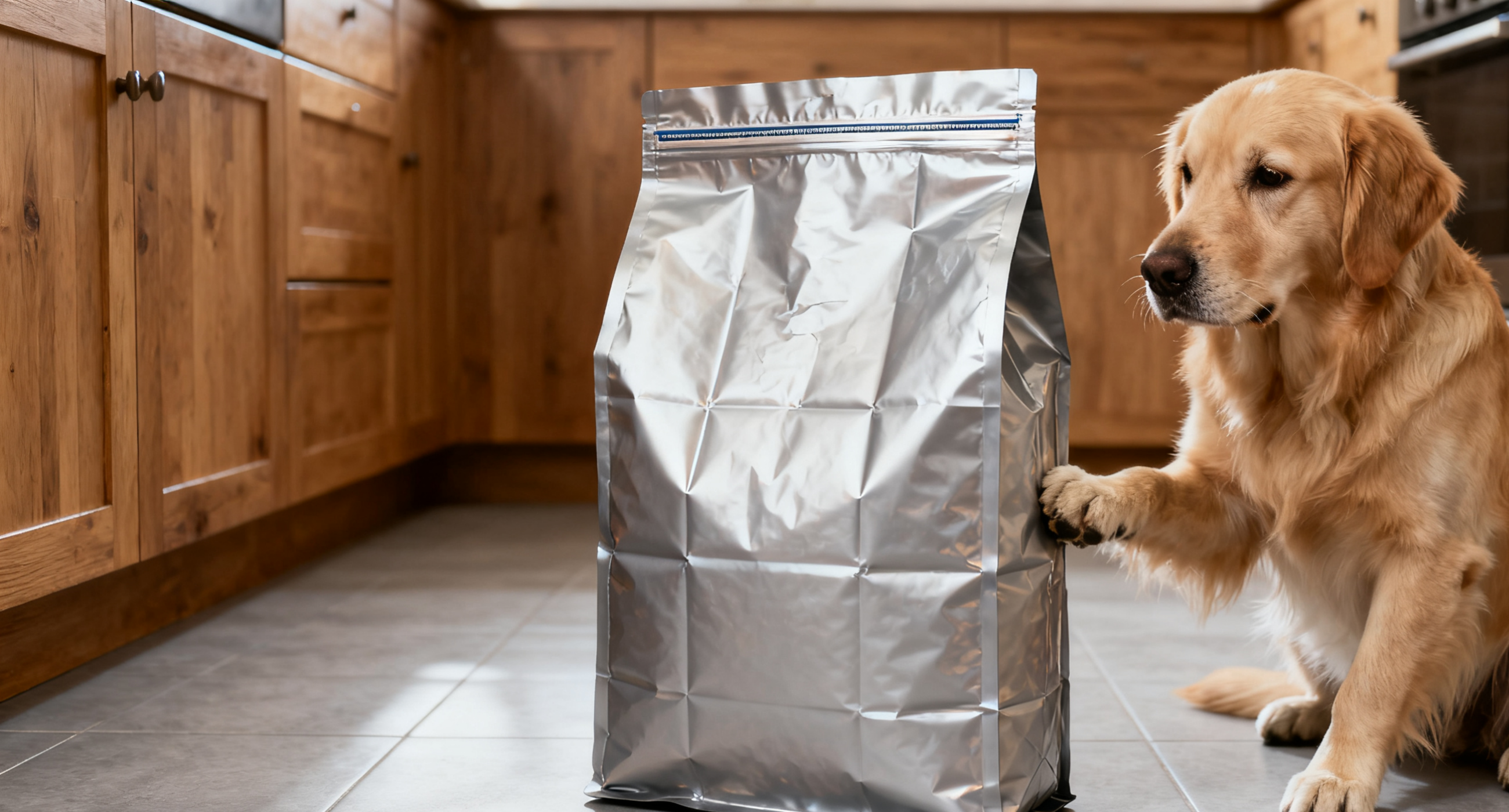
PET/AL/PE: For pet food that requires higher barrier properties, such as those containing high protein or fat, aluminum foil composite film is an ideal choice. Aluminum foil has excellent barrier effects against light, air, moisture, and oxygen, which can effectively prevent food oxidation and deterioration. The combination of aluminum foil with PET and PE not only enhances the barrier performance but also maintains the bag's mechanical strength and sealing performance. However, it should be noted that aluminum foil composite bags are opaque, so they are more suitable for products where the appearance of the food does not need to be displayed.
Kraft Paper/PE: Kraft paper composite material is another popular option, especially for brands pursuing an environmentally friendly and natural image. Kraft paper has good rigidity and tear resistance, and its natural texture can enhance the product's high-end sense. Combined with PE or PET, it can achieve a certain degree of water resistance and sealing. However, the barrier property of pure kraft paper is relatively poor, so it is usually necessary to add a layer of plastic film or aluminum foil in the composite structure to meet the storage requirements of pet food.
In conclusion, the flat bottom bag has become the best choice for pet food packaging due to its stable structure, excellent performance, and diverse material options. It not only effectively protects the quality of pet food and improves user experience but also provides strong support for brand promotion. With the continuous development of packaging technology and materials, the flat bottom bag will continue to play an important role in the pet food industry and bring more surprises to pet owners and brands.
