




Choosing the right packaging can make or break a food brand's shelf presence. A bag that tears during shipping, lets in moisture, or fades under warehouse lighting doesn't just cost money to replace — it damages customer trust. That's why sourcing decisions around food bags packaging deserve the same scrutiny as ingredient sourcing or recipe development.
Behind every reliable bag is a manufacturing process built on precision equipment and quality control. Brands that skip this due diligence often discover problems only after a shipment arrives damaged. Understanding what separates a dependable food bags factory from one that cuts corners can save both money and reputation down the line.

Material Options That Protect Freshness and Shelf Life
Not all packaging films perform the same way. Some materials excel at blocking oxygen and light, while others prioritize flexibility or cost efficiency. Snacks with high oil content, for instance, need stronger grease resistance than dry goods like rice or pasta. Getting this wrong with food plastic bag packaging often leads to premature spoilage, customer complaints, and costly product recalls.
The table below compares common materials used in flexible food packaging:
Material | Best For | Moisture Barrier | Typical Shelf Life Impact |
|---|---|---|---|
PE (Polyethylene) | Frozen foods, liquids | Moderate | 6-12 months |
PET/VMPET/PE laminate | Coffee, tea, snacks | High | 12-18 months |
Aluminum foil laminate | Chemicals, powders, sensitive goods | Very high | 18-24 months |
Kraft paper (lined) | Dry snacks, eco-conscious brands | Low to moderate | 3-6 months |
Choose a laminated aluminum structure if oxygen sensitivity is the top priority — coffee and freeze-dried products fall into this category. Kraft paper works better for brands prioritizing a natural aesthetic and shorter shelf cycles, such as bakery items sold within days of production.
Production Standards Behind Reliable Packaging Suppliers
Consistency in bag thickness, seal strength, and print quality comes down to the machinery and quality checks a supplier has in place. According to Zhongshan Maixin Packing Technology, a manufacturer based in Guangdong, China, its facilities span more than 15,000 square meters and employ over 168 skilled technicians across two production plants (maixinpackingtech.com). That kind of scale allows a dedicated food bags packaging operation to run multiple product lines simultaneously without sacrificing consistency.
Equipment matters just as much as square footage. A well-equipped food bags factory typically runs film blow machines, multi-color printing lines, laminating equipment, and bag-forming machines under one roof, reducing the handoffs that introduce defects. Maixin Packaging, for example, operates 26 bag-making machines alongside 14 online inspection machines and a GMP-certified workshop, allowing raw material development and film blowing to happen in-house rather than through third-party subcontractors.
This level of vertical integration gives brands more control over customization, from film thickness to barrier properties, without waiting on multiple external vendors.
Matching Packaging Formats to Product Types
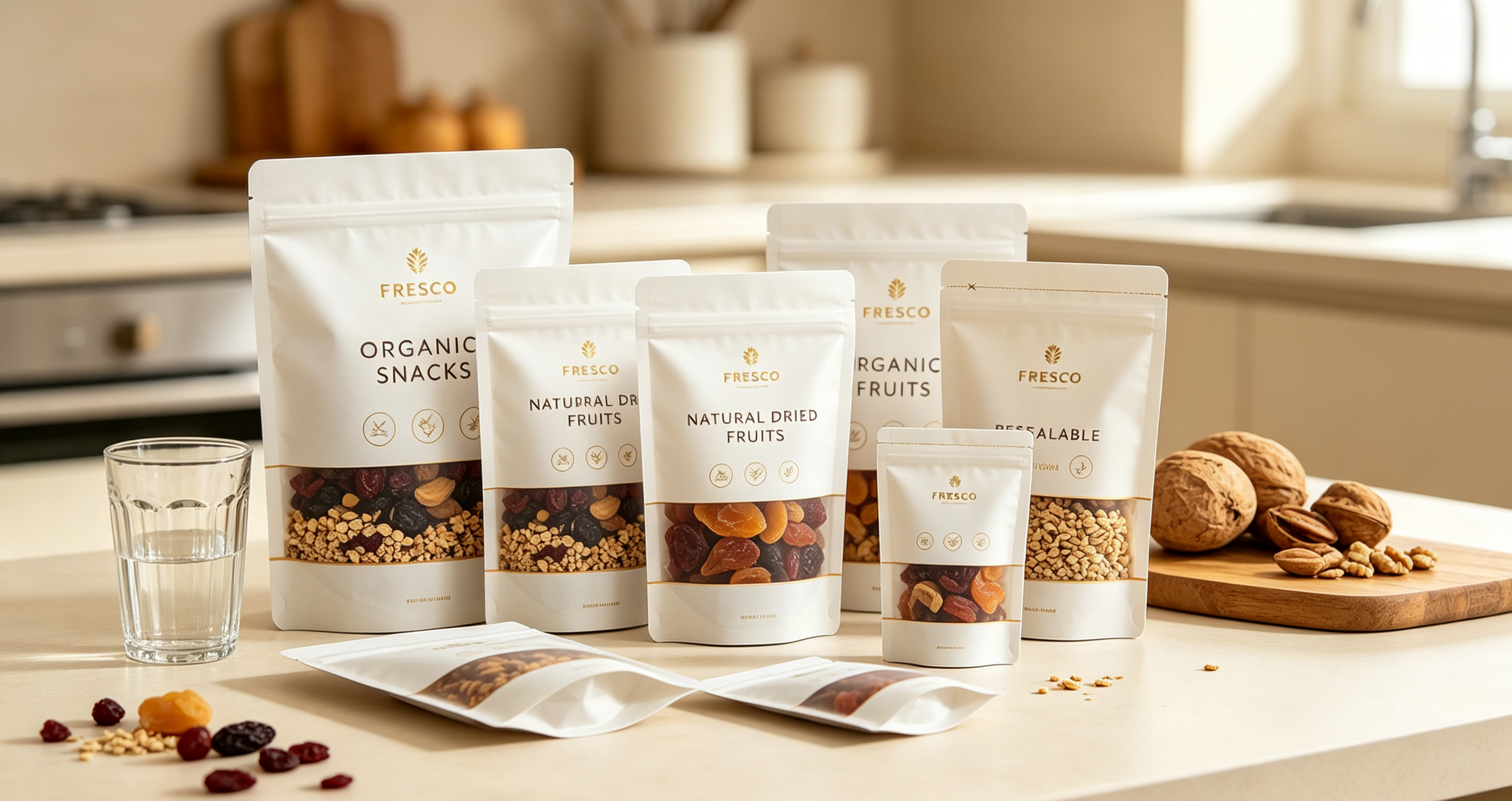
Format matters as much as material. A stand-up pouch with a resealable zip suits snacks and pet food that consumers dip into repeatedly, while a flat-bottom bag with a spout works better for liquids like sauces or oils. Facial masks and single-use cosmetic products call for smaller, precisely sealed sachets rather than larger pouches designed for bulk food items.
Tea and coffee brands frequently choose degassing valves paired with food plastic bag packaging to release carbon dioxide from freshly roasted beans while keeping oxygen out. Vacuum-sealed bags suit products like jerky or cured meats, where removing air extends shelf life significantly. Matching the format to how a customer actually uses the product reduces waste and improves the unboxing experience — a detail that increasingly influences repeat purchases.
Questions Brands Often Ask About Sourcing Packaging Partners
What certifications should a food packaging factory hold?
Look for GMP (Good Manufacturing Practice) certification at minimum, along with food-grade material compliance documentation. These confirm the facility meets hygiene and safety standards required for direct food contact.
How long does a custom packaging order usually take?
Timelines vary by supplier and complexity, but custom printed bags with unique dimensions or barrier requirements generally take longer than stock sizes with standard printing.
Which material offers the strongest moisture barrier?
Aluminum foil laminates provide the highest barrier protection, followed by PET/VMPET/PE structures. These work well for coffee, tea, and other moisture-sensitive products.
Can smaller brands order low minimum quantities?
Many manufacturers accommodate smaller runs for new or growing brands, though pricing per unit is typically higher than large-volume orders. It's worth asking suppliers directly about minimum order thresholds before finalizing a design.
What's the difference between kraft paper and plastic film bags?
Kraft paper offers a natural, eco-friendly appearance but generally provides a weaker moisture barrier than plastic film. Plastic laminates protect contents better over longer shelf periods but may not align with brands emphasizing sustainability.
Building a Long-Term Packaging Partnership
Packaging decisions ripple across a brand's entire supply chain, from how long products stay fresh on shelves to how customers perceive quality at first touch. Rather than treating this as a one-time purchase, brands benefit from building an ongoing relationship with a manufacturer capable of adapting materials and formats as product lines expand.
Quick answer: Food packaging decisions should balance material barrier properties, format compatibility with the product, and the production capabilities of the supplier. Laminated films like PET/VMPET/PE suit moisture-sensitive goods such as coffee and snacks, while kraft paper fits shorter shelf-life items with a natural aesthetic. Partnering with a vertically integrated facility — one that handles film production, printing, and bag-forming in-house — typically results in more consistent quality and greater customization flexibility over time.
