




Coffee freshness is fragile. From the moment beans leave the roaster, oxidation begins breaking down the oils responsible for flavor and aroma. A properly wrapped coffee bag slows that process dramatically—extending shelf life, preserving taste, and protecting product quality all the way to the consumer.
This article covers everything producers, roasters, and retailers need to know about wrapping coffee bags correctly: material selection, sealing methods, food safety requirements, and practical tips for getting it right every time.
The Role of Proper Coffee Packaging
Oxygen, light, heat, and moisture are coffee's four main adversaries. Each one degrades flavor compounds at a different rate, but together they can render a well-roasted batch stale within days if the packaging isn't up to standard.
For commercial producers, this translates directly into product quality on the shelf. A poorly sealed bag means flavor complaints, returns, and wasted product. Getting the wrapping process right—from material selection to sealing technique—isn't optional; it's foundational.
Choosing the Right Bag Material
Material choice determines barrier performance, shelf life, and brand presentation. The table below compares the most common options:
Bag Material | Oxygen Barrier | Moisture Barrier | Best For |
Kraft Paper | Low | Low | Short shelf life, eco branding |
PE/PP Laminate | Medium | Medium | Budget-friendly retail products |
Aluminum Foil Laminate | High | High | Long shelf life, premium coffee |
Biodegradable PLA Film | Medium | Medium | Sustainability-focused brands |
Aluminum foil laminate bags are the industry standard for a reason. They offer the strongest barrier performance, keeping coffee fresh for 6 to 12 months when properly sealed. Producers working with packaging food bags made from multi-layer laminated films—such as those available through Maixin Packaging —benefit from both high durability and flexible branding options.
Key Features a Coffee Bag Must Have
Regardless of material, a properly wrapped coffee bag requires several core features:
One-way degassing valve: Freshly roasted coffee releases CO₂ for several days post-roast. A one-way valve lets gas escape without letting oxygen in, preventing bag failure while maintaining a sealed environment.
Airtight seal: Heat sealing works best for single-use bags; resealable zippers suit retail packaging that consumers open and close repeatedly.
Moisture-resistant inner lining: The interior layer must prevent humidity from reaching the beans.
Light-blocking outer layer: Opaque materials, particularly foil-based laminates, protect coffee from UV degradation.
Vacuum Sealing Versus Nitrogen Flushing
Two methods dominate commercial coffee preservation: vacuum sealing and nitrogen flushing.
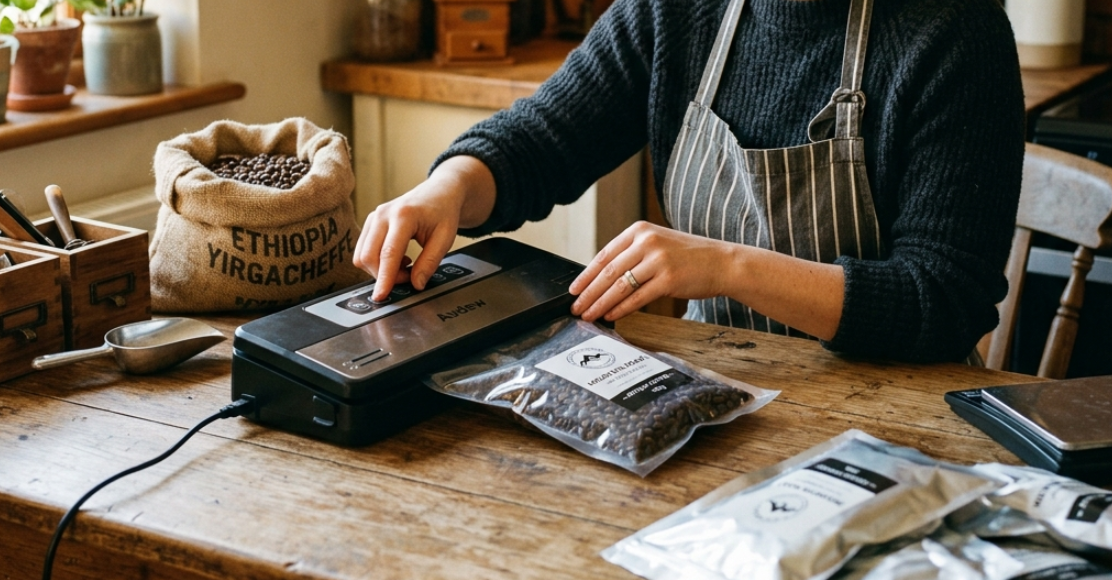
Vacuum sealing removes all air before the bag is sealed. This is the principle behind vacuum packed coffee, which has been a commercial standard since the early 20th century. Vacuum packed coffee is particularly effective for ground coffee, which has a larger surface area and oxidizes more quickly than whole beans. Removing oxygen eliminates the primary driver of flavor degradation.
Nitrogen flushing replaces the bag's air with inert nitrogen gas before sealing. Because nitrogen doesn't react with coffee oils, it preserves flavor without compressing the beans. Many specialty roasters prefer this method—it maintains the beans' physical structure and allows CO₂ to continue releasing naturally through the degassing valve.
Both methods require using packaging food bags with strong oxygen and moisture barriers. Both also depend on using food grade packaging bags—materials certified as safe for direct or indirect food contact. Food grade packaging bags must comply with applicable regulations, such as FDA standards in the United States or EU food contact material requirements in Europe, ensuring no harmful compounds migrate into the product.
Steps to Wrap a Coffee Bag Correctly
Follow this sequence for a properly wrapped, shelf-ready product:
Fill the bag with correct headspace: Leave 10–20% headspace to accommodate CO₂ release and ensure a clean seal.
Apply a degassing valve: For freshly roasted coffee, attach a self-adhesive one-way valve before sealing.
Remove air or flush with nitrogen: Use a vacuum sealer or nitrogen flush system based on your preservation preference.
Heat seal the bag: Set the commercial heat sealer to the correct temperature for your bag's material. Incorrect settings produce weak seals that fail in storage or transit.
Check seal integrity: Press along the sealed edge to detect weak spots. High-volume producers often use dedicated leak testers.
Label and store: Apply labels post-seal and store in a cool, dry location away from light.
Selecting Bags That Meet Food Safety Standards
Food safety certification is non-negotiable. Regardless of product type—ground coffee, whole beans, or single-serve pods—packaging must be produced from food grade packaging bags that comply with food contact regulations in the target market.
Maixin Packaging (www.maixinpackingtech.com), based in Zhongshan, China, manufactures a range of certified coffee packaging solutions including vacuum bags, stand-up pouches, and ziplock bags. Their packaging food bags are produced using multi-layer laminated films designed for food contact safety, with fully customizable print options for branded retail use.
Practical Tips for Coffee Bag Producers
Match bag size to product volume. Excess headspace increases residual oxygen even after vacuum sealing.
Choose stand-up pouches with flat bottoms for retail—they display better on shelves and offer more branding surface area.
Use matte finishes to signal premium positioning; gloss finishes create stronger visual impact at distance.
Always test new bag materials with your actual product before scaling production. Roast level and moisture content can affect how bags perform over time.

Frequently Asked Questions
Can regular plastic bags be used for coffee storage?
No. Standard plastic bags lack the barrier properties needed to block oxygen and moisture. Multi-layer laminated bags designed specifically for food bags packaging are required for any meaningful shelf life.
Does vacuum sealing work for whole bean coffee?
Yes, with a qualification. Freshly roasted beans continue releasing CO₂ and can cause bag expansion if sealed immediately. Rest beans for 24–48 hours after roasting before vacuum sealing, or use bags equipped with degassing valves.
Are biodegradable coffee bags effective for long-term storage?
Biodegradable films have improved, but most offer lower barrier performance than foil laminates. They suit short shelf life products or brands where sustainability is a primary priority.
Are stand-up pouches better than flat bags for coffee retail?
For retail use, yes. Stand-up pouches have better shelf presence and are easier to reseal, making them the preferred format. Flat bags remain common for wholesale or bulk distribution.
Do coffee bags need food safety certification?
Yes. Any bag in direct or indirect contact with food must comply with applicable food contact material regulations. Confirm all certifications with your packaging supplier before committing to production.
The Right Packaging Protects Every Bean
A well-wrapped coffee bag preserves flavor, builds customer trust, and reduces product waste. From material selection to sealing technique, each decision in the packaging process has a direct impact on what ends up in the consumer's cup. Producers who prioritize packaging quality see fewer complaints, stronger shelf performance, and longer product freshness. For custom coffee packaging solutions tailored to roasters and producers of all sizes, visit Maixin Packaging at www.maixinpackingtech.com.
TL;DR: Wrapping a coffee bag correctly requires selecting food grade packaging bags with high oxygen and moisture barrier properties, applying a one-way degassing valve, filling with appropriate headspace, and sealing using vacuum sealing or nitrogen flushing. Packaging food bags made from multi-layer laminated films provide the best shelf life performance, and vacuum packed coffee remains one of the most effective methods for preserving ground coffee freshness at commercial scale.
