




Potato chip packaging is more than just a container—it's a critical factor that preserves product quality, enhances shelf appeal, and communicates brand value. When customizing your potato chip packaging, three key elements demand careful consideration: essential performance requirements, available bag types, and suitable materials. This guide will walk you through each aspect to help you create a packaging solution that meets both functional and aesthetic needs.
Essential Performance Requirements of Potato Chip Packaging
Performance Aspect | Key Requirements | Rationale |
Barrier Protection | High resistance to oxygen, moisture, and light | Oxygen causes oxidation, leading to rancidity; moisture makes chips stale; light accelerates nutrient degradation and flavor loss. |
Seal Integrity | Airtight and leak-proof seal | Prevents air and moisture infiltration, maintains the crispness of chips, and extends shelf life |
Cushioning & Durability | Impact resistance and tear resistance | Potato chips are fragile—packaging must withstand transportation and handling without breaking, avoiding crushing or crumbling of the product. |
Food Safety | Non-toxic, odorless, and compliant with food contact standards | Ensures no harmful substances migrate into the chips, protecting consumer health and meeting regulatory requirements. |
Printability | Compatible with high-resolution printing | Supports brand storytelling, product information display, and eye-catching designs to attract consumers. |
Convenience | Easy to open and resealable | Enhances user experience—tear notches allow quick access, while resealable zippers help maintain freshness after opening. |
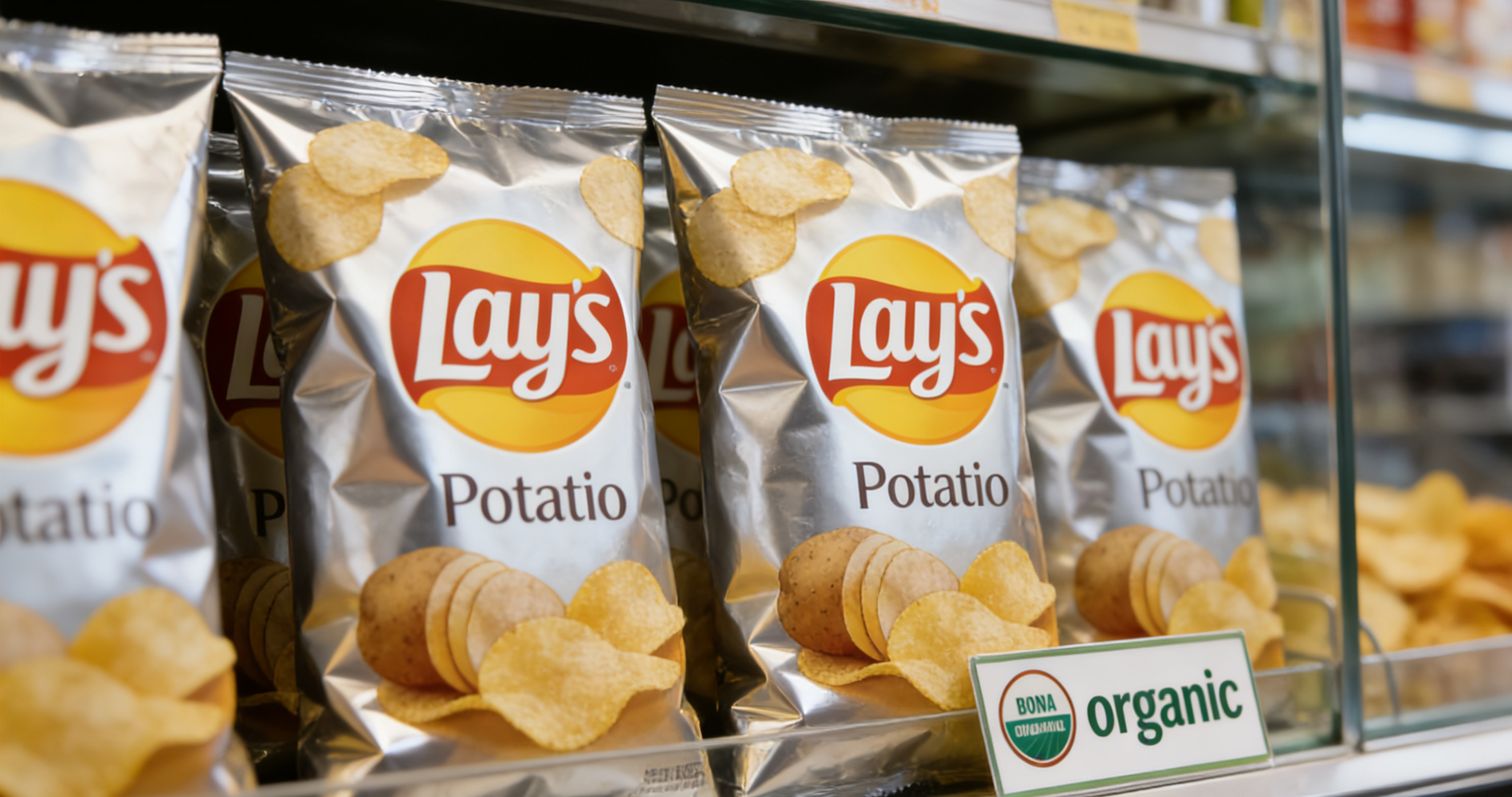
Available Bag Types for Potato Chip Packaging
Choosing the right bag type depends on your product volume, storage needs, and marketing goals. Here are the most popular options:
1. Three-Side Seal Bag
This is the most basic and cost-effective bag type. It is constructed by sealing three sides of a flat film, leaving one side open for filling. Ideal for small to medium-sized portions (10–50g), it offers simplicity and versatility. The flat design saves space during storage and transportation, making it a preferred choice for budget-conscious brands or promotional products. However, it lacks stand-up capability and may require additional packaging (e.g., boxes) for display.
2. Stand-Up Pouch (SUP)
A stand-up pouch is designed with a bottom gusset that allows it to stand upright on store shelves, maximizing visibility. It combines functionality with aesthetic appeal, making it suitable for various portion sizes (20–200g). Most stand-up pouches come with resealable features (zipper or slider), which improve convenience and extend product freshness. This bag type is perfect for premium or mainstream brands looking to stand out on crowded shelves, as it provides ample space for high-quality printing and brand messaging.
3. Pillow Pouch
Named for its soft, pillow-like shape, this bag type is formed by sealing the top and bottom of a tubular film, creating a seamless side. It is lightweight, cost-efficient, and suitable for high-speed production lines, making it ideal for mass-produced chips (50–150g). Pillow pouches are easy to stack and transport, but they do not stand upright and are typically not resealable unless modified. They are a practical choice for value-oriented brands or products sold in bulk.
How to Match Bag Type & Material Combination
The success of your packaging depends on aligning bag type with material choice. Here's a quick matching guide:
Bag Type | Recommended Material Combination | Reason |
Three-Side Seal Bag | BOPP + CPP | Cost efficiency matches the bag's budget; flat design doesn't require extra structural support. |
Stand-Up Pouch | Metallized BOPP + CPP (mid-range) or PET + CPP (premium) | Stand-up pouches need visual appeal—metallized/PET outer layers enhance branding, while CPP ensures resealable zipper functionality. |
Pillow Pouch | BOPP + CPP (basic) or Metallized BOPP + CPP (upgraded) | Pillow pouches prioritize speed/cost—lightweight composites work with high-speed production lines. |
Conclusion
Customizing your potato chip packaging requires a balance of performance, functionality, and brand identity. By prioritizing essential performance requirements (e.g., barrier protection, seal integrity), selecting the right bag type (e.g., stand-up pouch for shelf appeal, three-side seal for cost savings), and choosing suitable materials (e.g., aluminum foil for long shelf life, metallized BOPP for affordability), you can create packaging that preserves your product's quality while attracting consumers. Whether you're a new brand or looking to refresh your packaging, considering these factors will help you design a solution that aligns with your goals and stands out in the market.
