




Have you ever prepared a package for shipping, only to find the shrink film has tightened more than expected, distorting the product inside? Or perhaps you've ended up with a loose wrap that offers little protection. Understanding exactly how much shrink film will contract is key to mastering the packaging process, ensuring your products are secure, presentable, and undamaged upon arrival.
Shrink film is a cornerstone of modern packaging, used to bundle everything from software boxes to multi-packs of soda. Its ability to conform tightly to the shape of an object provides stability, tamper evidence, and a professional finish. However, not all films are created equal. The amount of shrinkage can vary significantly based on the type of material, its thickness, and the application process.
This guide will explain the factors that determine shrinkage rates and provide clear insights into what you can expect from different types of shrink film. By understanding the science behind the shrink, you can select the right material for your needs, optimize your packaging line, and achieve a perfect wrap every time. Let's explore the specifics of how much shrink film shrinks and how you can control it.

Material Composition
The base polymer used to create the film is the primary determinant of its shrink properties. The three most common types of shrink film used in commercial packaging are Polyolefin (POF), Polyvinyl Chloride (PVC), and Polyethylene (PE).
· Polyolefin (POF): This is the most popular choice for retail packaging. POF is known for its excellent clarity, durability, and FDA approval for direct food contact. It typically offers a balanced, or "biaxial," shrink, meaning it contracts evenly in both the machine direction (MD) and transverse direction (TD).
· Polyvinyl Chloride (PVC): PVC was once the standard but has become less common due to environmental and health concerns regarding its plasticizers. It's a stiffer film that shrinks at lower temperatures. However, its shrinkage can be less predictable, and it can become brittle in cold conditions.
· Polyethylene (PE): This is the material used for heavier-duty applications, like bundling cases of water or wood. It’s less clear than POF or PVC but offers superior strength and puncture resistance. PE film is often used for transit packaging rather than retail display.
Shrink Ratios Explained
Manufacturers measure shrink potential in two directions:
1.Machine Direction (MD): This is the direction the film moves through the packaging machinery.
2.Transverse Direction (TD): Also known as the cross direction, this is perpendicular to the MD.
A film might be described as having a 60% MD shrink and a 20% TD shrink. This means it will contract significantly more in one direction than the other. This is called a "preferential" shrink. Conversely, a film with a 40% MD and 40% TD shrink rate has a "balanced" shrink, contracting uniformly.
Shrink Rates by Film Type
Now that we understand the basics, let's look at the typical shrinkage percentages you can expect from the most common types of shrink film. These are general ranges, and specific products from different manufacturers will have their own precise specifications.
1. Polyolefin (POF) Shrink Film
Polyolefin is prized for its consistent and reliable performance. It is a versatile material suitable for wrapping products of all shapes and sizes.
· Typical Shrink Rate: POF films generally shrink between 40% and 50%.
· Directional Shrink: Most standard POF films are biaxially balanced, meaning they shrink evenly in both the machine and transverse directions. For example, a high-performance film might have a 45% MD and 45% TD shrink. This uniformity is crucial for creating a smooth, tight fit around irregularly shaped items without distortion.
· Low Shrink Force: POF also has a relatively low "shrink force," which is the amount of pressure the film exerts on the product as it cools. This makes it ideal for delicate items like thin cardboard boxes, magazines, or stacks of paper that could bend or warp under high tension.
2. Polyvinyl Chloride (PVC) Shrink Film
PVC is a more rigid film that was historically popular for its low cost and ease of use.
· Typical Shrink Rate: PVC film tends to have a higher shrink potential, often up to 50% to 60%.
· Directional Shrink: PVC is often a preferential shrink film, meaning its MD and TD shrink rates can be very different. A common configuration might be 50% shrink in the MD and 20% in the TD. This characteristic can be useful for specific applications, like sleeving a bottle, where you want the film to conform tightly around the circumference but shrink less along the length.
· High Shrink Force: A key drawback of PVC is its high shrink force. As it cools, it continues to tighten, which can crush or damage fragile products. It also becomes brittle with age and in cold temperatures, making it less suitable for frozen goods.
3. Polyethylene (PE) Shrink Film
Polyethylene is the workhorse of the shrink film world, used for bundling heavy items.
· Typical Shrink Rate: PE has a lower shrink rate compared to POF and PVC, typically ranging from 20% to 30%. Some specialty formulations can go higher.
· Directional Shrink: Like PVC, PE is often a preferential shrink film. A common formulation is Low-Density Polyethylene (LDPE), which might offer around 25% shrink in the MD and 15% in the TD. This lower, controlled shrink is perfect for bundling heavy, stable items like beverage cans, as it provides compression without excessive force.
· High Strength: The main advantage of PE is its durability and puncture resistance. Its lower shrink rate is a trade-off for its ability to secure heavy loads effectively.
How Heat Affects Shrinkage
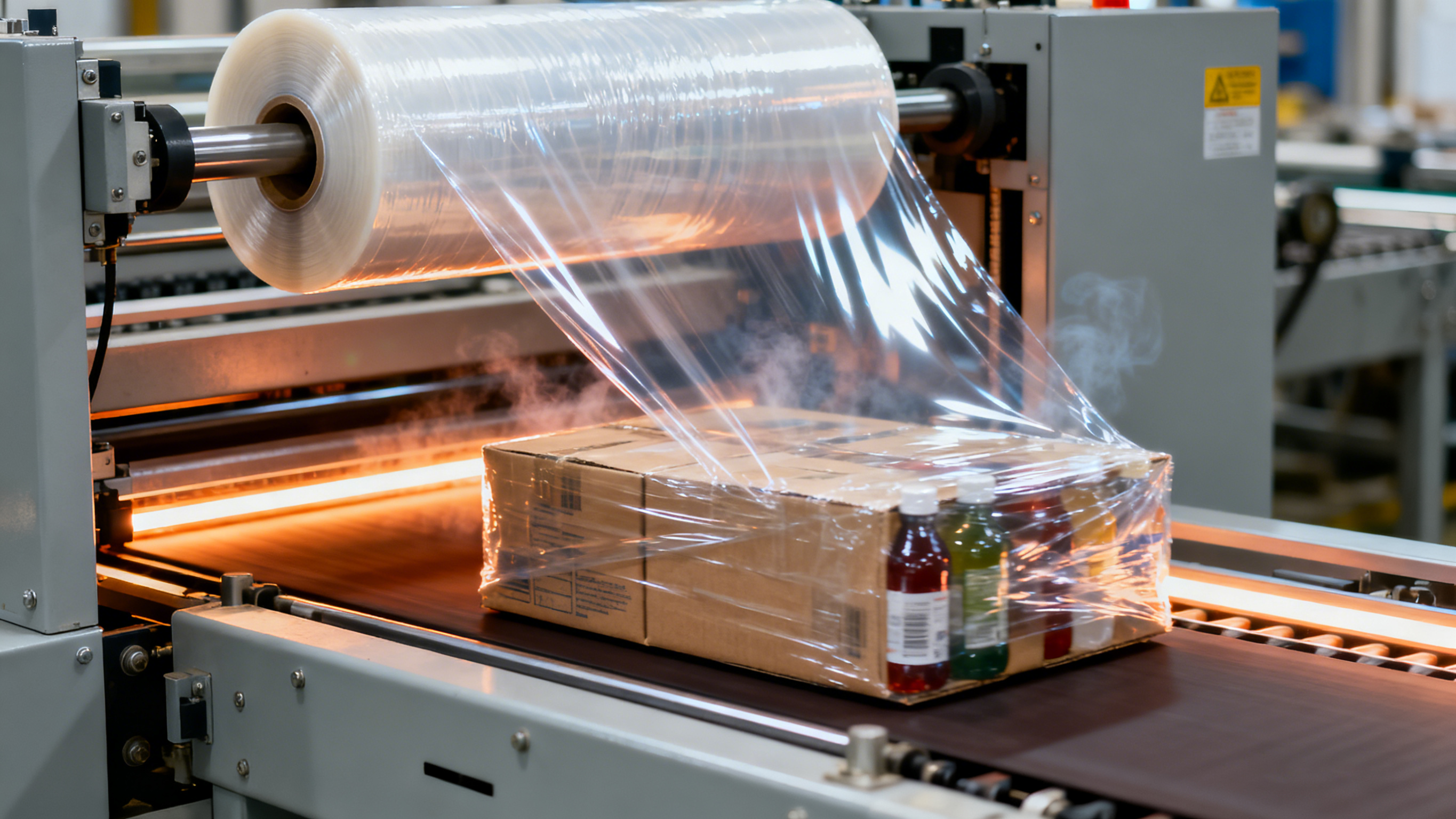
The amount and duration of heat applied in a shrink tunnel are critical for achieving the desired result. Too little heat, and the film won't shrink fully, leading to a loose, sloppy package. Too much heat can cause the film to burn, melt, or shrink excessively, creating a "dog ear" effect or even damaging the product.
· Temperature: Each type of film has an optimal shrink temperature. PVC shrinks at lower temperatures (around 180-250°F or 82-121°C), while POF requires higher temperatures (around 250-350°F or 121-177°C).
· Dwell Time: The amount of time the package spends in the heat tunnel also affects the final shrink. A faster conveyor speed means less dwell time and potentially less shrinkage.
· Air Velocity: The speed of the air circulating within the tunnel ensures even heat distribution. Proper air velocity helps the film conform smoothly to the product's contours.
Achieving the perfect shrink is a matter of balancing these three variables—temperature, dwell time, and air velocity—for the specific film and product you are using.
Choosing the Right Shrink Film
Selecting the correct film involves more than just knowing its shrink rate. Consider the following to make an informed decision:
· Product Shape and Fragility: For delicate or irregularly shaped items, a biaxially balanced POF film with low shrink force is ideal.
· Application: Are you creating a retail-ready multi-pack or bundling heavy items for transit? POF offers excellent clarity for retail, while PE provides the strength needed for bundling.
· Machinery: Ensure your shrink tunnel can reach the required temperatures for the film you choose. POF requires higher heat than PVC.
Your Partner in Packaging
Understanding how much shrink film shrinks is the first step toward flawless packaging. By knowing the properties of POF, PVC, and PE films and how heat influences their behavior, you can eliminate guesswork and produce consistent, professional-looking results. Whether you need the crystal clarity of polyolefin or the rugged strength of polyethylene, there is a shrink film designed to meet your specific needs.
If you're unsure which film is right for your application, consulting with a packaging expert can save you time and money. They can help you analyze your product, machinery, and goals to recommend a solution that delivers optimal performance and protection.
