




In the dynamic landscape of packaging solutions, plastic zipper packages have emerged as indispensable companions for both consumers and industries worldwide. Characterized by their resealable design, durability, and adaptability, these packages have transcended traditional packaging limitations, becoming a preferred choice across food, healthcare, electronics, and retail sectors. From preserving the freshness of snacks to protecting sensitive industrial components, plastic zipper packages blend functionality with convenience, driving their steady market growth. According to industry reports, the global market for plastic zipper-integrated packaging is projected to reach $43.48 billion by 2035, with a compound annual growth rate (CAGR) of 3.8% from 2026 to 2035, reflecting their enduring relevance in modern supply chains . This article delves into the key types, core advantages, diverse applications, and sustainable innovations of plastic zipper packages, unraveling their multifaceted impact on the packaging industry.
1. Core Types of Plastic Zipper Packages: Materials and Characteristics
Plastic zipper packages exhibit remarkable diversity in materials and structural designs, tailored to specific use cases. The following table compares the most common types, their base materials, and performance attributes:
Package Type | Base Materials | Key Characteristics | Typical Applications |
PE Zipper Packages | Low-Density Polyethylene (LDPE), Linear LDPE (LLDPE) | Excellent flexibility, high tear resistance, cost-effective, good sealability | Snack packaging, frozen food, daily necessities |
PP Zipper Packages | Polypropylene (PP) | Rigid structure, heat-resistant (up to 100°C), ideal for upright display | Pet food, powdered supplements, dried fruits |
Composite Zipper Packages | PE/PP + Nylon (PA)/EVOH/Aluminum Foil | Superior barrier against oxygen/moisture/light, enhanced durability | Coffee, nuts, medical devices, electronic components |
Degradable Zipper Packages | PLA (Polylactic Acid), PBAT | Environmentally friendly, biodegradable under specific conditions, GRS-certified | Premium food, eco-friendly retail products |
Waterproof Zipper Packages | PE/PP with waterproof strips | Dual-seal design, moisture-proof, corrosion-resistant | Outdoor gear, aquatic sports equipment, travel kits |
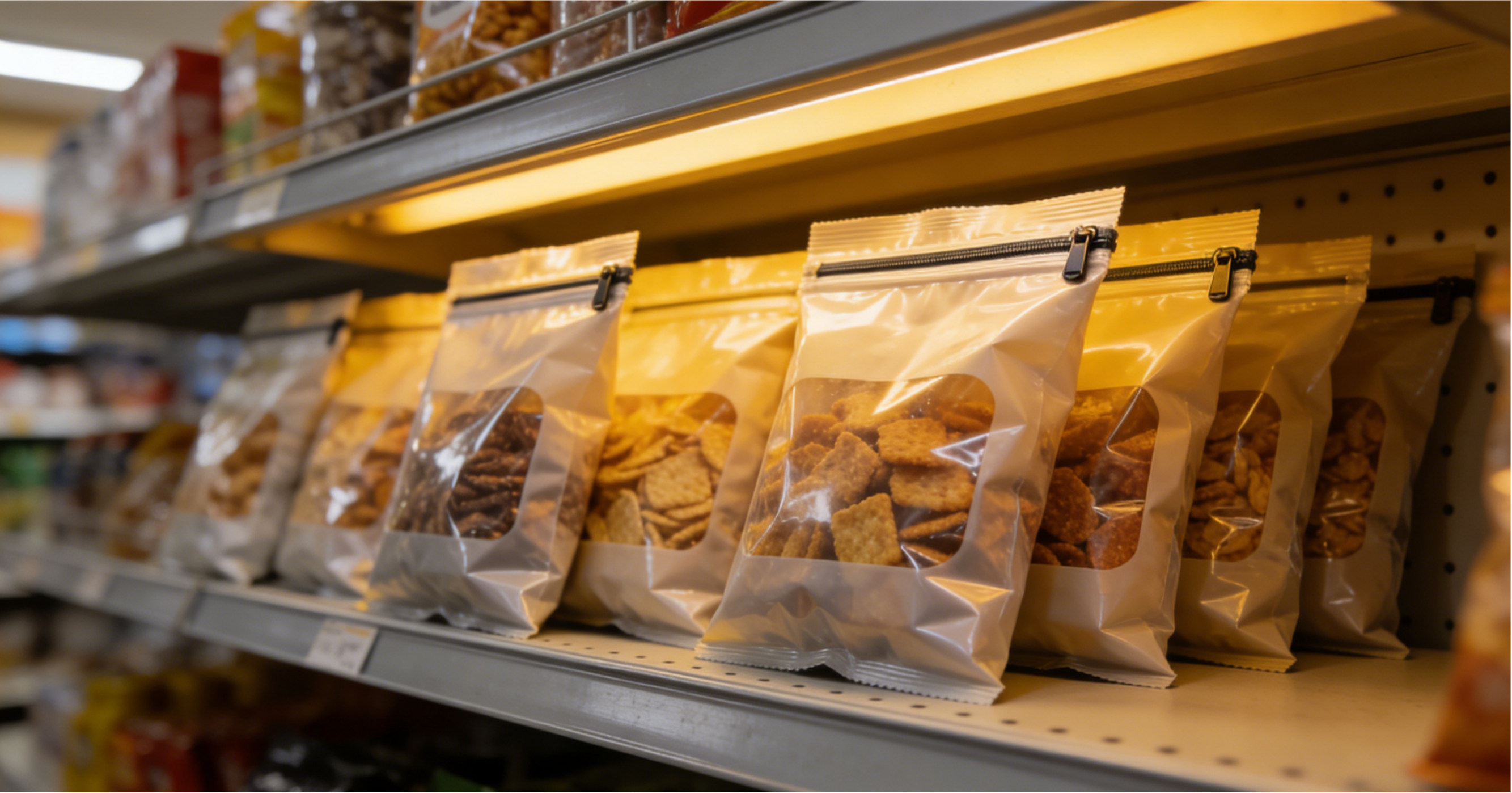
Notably, self-standing (stand-up) zipper packages—a subset of the above types—have gained immense popularity in retail due to their shelf appeal and space efficiency. Composed of multi-layered films (e.g., PET/PE or OPP/PE), these packages can stand independently, optimizing product visibility while maintaining sealing integrity .
2. Unrivaled Advantages: Why Plastic Zipper Packages Stand Out
Plastic zipper packages offer a compelling array of benefits that distinguish them from conventional packaging:
Superior Sealability and Freshness Retention: The interlocking zipper mechanism creates an airtight barrier, preventing moisture, dust, and oxygen penetration. For food products, this extends shelf life by 30-50% compared to non-resealable alternatives, as seen in snack and coffee packaging . High-quality zippers, such as concave-convex tooth designs, provide tactile feedback ("click" sensation) during closure, assuring users of secure sealing .
Reusability and Cost Efficiency: Unlike single-use packaging, plastic zipper packages can be opened and closed repeatedly without compromising performance. This reusability reduces packaging waste and lowers long-term costs for consumers, while businesses benefit from reduced material consumption for bulk products . For instance, 100% recycled PE zipper packages maintain tensile strength (≥18MPa) equivalent to virgin materials, enabling multiple reuse cycles .
Versatility and Customization: These packages adapt to diverse shapes and sizes, from small pouches for cosmetics to large industrial bags. Manufacturers offer customization options such as UV protection, anti-static coatings, and Pantone-matched printing, catering to brand-specific needs . Additionally, features like hang holes, transparent windows, and tear notches enhance user convenience and product display .
Safety and Compliance: Food-grade plastic zipper packages adhere to strict standards such as FDA 21 CFR 177.1520 and EU 10/2011, ensuring no harmful substance migration. Medical-grade variants comply with ISO 10993 and YY/T 0698, making them suitable for sterile packaging of medical devices .
3. Wide-Ranging Applications Across Industries
The adaptability of plastic zipper packages has expanded their footprint across numerous sectors:
Food and Beverage: The largest application segment (62% of market share), encompassing snacks, pet food, coffee, dried fruits, and 预制菜 (ready-to-cook meals). Stand-up zipper packages are favored by brands like Qiaqia Food and Liangpin Puzi for their shelf presence and freshness preservation . In 2024, pet food zipper package usage grew by 21.3% amid the booming pet economy .
Healthcare and Pharmaceuticals: Used for sterile packaging of medical devices, diagnostic kits, and pharmaceutical intermediates. These packages provide barrier protection against contamination and facilitate easy access for healthcare professionals .
Electronics and Industrial: Anti-static plastic zipper packages safeguard sensitive components (e.g., circuit boards, batteries) from electrostatic damage and dust. Industrial variants with high tear resistance are used for hardware parts and automotive components .
Retail and Consumer Goods: Applied in cosmetics, toiletries, stationery, and clothing accessories. Small-sized PVC zipper bags serve as convenient storage for travel essentials, while larger pouches with custom logos act as promotional items .

4. Sustainable Innovations: Toward Eco-Friendly Packaging
Amid global plastic pollution concerns, the industry is transitioning toward greener alternatives for plastic zipper packages:
Recycled and Bio-Based Materials: Manufacturers are increasingly using post-consumer recycled (PCR) PE, with 100% recycled PE zipper packages reducing carbon emissions by 72% compared to virgin plastic . Bio-based materials like PLA and PBAT offer biodegradability, though cost (3-5 times higher than traditional PE) remains a barrier to mass adoption .
Circular Economy Initiatives: Companies are implementing closed-loop systems, where used packages are collected, recycled, and reprocessed into new zipper packages. GRS 4.0 certification ensures traceability of recycled materials, meeting consumer demand for transparent sustainability .
Policy-Driven Transformation: Stringent regulations such as China’s "Dual Carbon" strategy and the EU’s Restriction of Hazardous Substances (RoHS) are pushing manufacturers to adopt eco-friendly designs. Mono-material structures (e.g., single-layer PE) are gaining traction for easier recyclability .
Conclusion
Plastic zipper packages have evolved from simple resealable bags to sophisticated, multi-functional packaging solutions, driving efficiency, convenience, and sustainability across industries. Their diverse types, unrivaled advantages, and wide applications underscore their pivotal role in modern packaging ecosystems. As the industry embraces green innovations—from recycled materials to circular economy models—plastic zipper packages are poised to meet evolving consumer demands and regulatory requirements. With a projected market size exceeding $43 billion by 2035, these packages will continue to shape the future of packaging, balancing functionality with environmental responsibility. For businesses and consumers alike, plastic zipper packages remain a reliable choice that adapts to changing needs while contributing to a more sustainable supply chain.
