




1. Introduction: The Pivotal Role of Snack Bags in the Global Snack Industry

The global snack industry is a dynamic, multi-billion-dollar sector driven by changing consumer lifestyles—on-the-go eating, demand for convenience, and craving for diverse flavors. In this competitive landscape, snack bags are far more than just containers: they are brand ambassadors, freshness guardians, and key drivers of consumer purchase decisions. For snack manufacturers, retailers, and distributors, investing in high-quality snack bags is not an option but a necessity—one that directly impacts product integrity, shelf life, brand loyalty, and bottom lines.
This comprehensive guide is tailored to food industry professionals seeking to understand the science, technology, and practical applications of premium snack bags. Whether you’re a small-batch artisanal snack maker or a large-scale global brand, we’ll break down how to select, design, and leverage snack bags that protect your product’s freshness, enhance its appeal, and align with regulatory and sustainability goals.
1.1 The Booming Global Snack Market: Why Packaging Matters More Than Ever
1.1 The Booming Global Snack Market: Why Packaging Matters More Than Ever
On-the-Go Consumption: 68% of consumers eat snacks outside the home (Nielsen), requiring packaging that is lightweight, portable, and leak-proof. A poorly designed snack bag—one that tears easily or spills—will quickly be abandoned for a more convenient alternative.
Shelf Life Expectations: Consumers demand snacks that stay fresh from purchase to consumption, even with extended storage. For example, a bag of potato chips should remain crispy for 6-8 weeks, while a package of nuts should avoid rancidity for 3-6 months. Inadequate packaging leads to wasted inventory and disappointed customers.
Shelf Appeal: With thousands of snack options competing for space on grocery shelves, packaging is the first point of contact between your product and consumers. A visually striking, functional snack bag can increase shelf visibility by 30% (Point of Purchase Advertising International), driving impulse buys.
1.2 Unique Challenges of Snack Preservation: Why Generic Bags Fail
Oxidation: High-fat snacks (nuts, chips, jerky) are prone to rancidity when exposed to oxygen, resulting in off-flavors and a shortened shelf life.
Moisture Migration: Crispy snacks absorb moisture from the air, becoming soggy; soft snacks (cookies) lose moisture, becoming dry and crumbly.
Aroma Loss: Many snacks (e.g., flavored chips, spiced nuts) derive their appeal from unique aromas, which escape through porous packaging—reducing consumer satisfaction.
Generic plastic bags lack the tailored barrier properties, sealing integrity, and structural design to address these challenges. A premium snack bag, by contrast, is engineered to match the specific needs of your snack, ensuring it reaches consumers in peak condition.
1.3 What You’ll Gain from This Guide
Identify the key spoilage risks for your specific snack type and how to mitigate them with targeted packaging.
Recognize the core characteristics of high-performance snack bags (barrier properties, seal strength, durability, etc.).
Select the right snack bag type, material, and design for your product (e.g., for chips, high-barrier bags for nuts).
Navigate global regulatory requirements for food-contact snack bags.
Evaluate suppliers to find a partner that delivers consistent quality and customization.
Stay ahead of emerging trends (sustainable materials, intelligent packaging) that are reshaping the snack bag industry.
2. The Science of Snack Spoilage: Why Premium Snack Bags Are Non-Negotiable
2.1 Key Spoilage Factors for Snacks
2.1.1 Oxidation: The Enemy of High-Fat and Crispy Snacks
High-fat snacks: Nuts, seeds, jerky, potato chips, and fried snacks.
Starchy snacks: Crackers, pretzels, and bread-based snacks.
Rancidity: Fats break down into aldehydes and ketones, producing a stale, “off” smell and taste. Rancid snacks are unappealing to consumers and may cause digestive discomfort.
Loss of Crispness: Oxidation breaks down starch molecules in crispy snacks, leading to sogginess. A study by the Institute of Food Technologists (IFT) found that chips lose 50% of their crispness within 7 days of exposure to oxygen.
Nutrient Degradation: Vitamins A, C, and E—often added to fortified snacks—are highly sensitive to oxygen. Oxidation can reduce vitamin content by 30-50% within a month.
Oxygen exposure is not just a storage issue: it begins the moment the snack is produced. Even trace amounts of oxygen (as low as 0.5%) can trigger oxidation over time.
2.1.2 Moisture Migration: Sogginess vs. Dryness
Moisture Gain: Crispy snacks (chips, pretzels, crackers) absorb moisture from the air, becoming soft and stale. For example, a cracker with 3% moisture content will turn soggy when its moisture content rises to 8%—a change that can happen in 24 hours in humid environments.
Moisture Loss: Soft snacks (cookies, pastries, dried fruit with added moisture) lose moisture to dry air, becoming hard and crumbly. A cookie with 15% moisture content will become inedible when it drops to 8%.
Cross-Contamination: Mixed snacks (e.g., a trail mix with nuts, dried fruit, and chocolate) face moisture migration between components. Dried fruit (high moisture) can transfer moisture to nuts (low moisture), causing the nuts to become soggy and the fruit to dry out.
2.1.3 Microbial Growth: Mold and Bacteria in High-Moisture Snacks
Soft snacks: Cookies, brownies, pastries (moisture content 10-20%).
Dried fruits: Raisins, dates, mango (moisture content 15-25%).
Savory snacks: Cheese puffs, meat snacks, and dips (moisture content 8-15%).
Mold: Penicillium and Aspergillus grow on soft snacks and dried fruits, producing visible colonies and mycotoxins (harmful compounds that can cause illness).
Bacteria: Lactobacillus and Leuconostoc cause souring in high-moisture savory snacks, while Salmonella and E. coli (from cross-contamination during production) pose food safety risks.
2.2 The Cost of Cutting Corners on Snack Bags
2.2.1 Financial Losses from Spoilage and Waste
A mid-sized chip manufacturer using generic PE bags may waste 15% of its production due to staleness. Switching to premium barrier bags can reduce that waste to 3%, adding $2-3 million in annual revenue.
A small-batch nut brand using paper-lined bags may see 20% of its inventory become rancid before reaching retailers. High-barrier snack bags can cut that spoilage to 4%, preserving thousands in profit.
2.2.2 Brand Damage and Lost Customer Loyalty
A consumer buys a bag of chips that is soggy 2 weeks before the expiration date. They post a photo of the stale chips on TikTok, tagging the brand—garnering 100,000 views and hundreds of negative comments.
A parent packs a snack for their child, only to find the bag has torn open in their backpack, spilling crumbs everywhere. The parent switches to a competing brand with more durable packaging.
Customer loyalty is hard-won and easily lost. A study by Accenture found that 60% of consumers will stop buying a brand after just one negative experience with product quality—including spoilage or packaging failure.
2.2.3 Regulatory Risks and Market Access Barriers
Product Recalls: If a snack bag leaches harmful chemicals (e.g., BPA, phthalates) into the product, or if it fails to prevent microbial contamination, regulators may force a recall. A recall can cost a brand millions in lost sales, disposal fees, and legal costs.
Fines and Sanctions: In the European Union, violations of Regulation (EU) No 10/2011 (food contact materials) can result in fines of up to €100,000. In the United States, the FDA can impose penalties of $1.2 million per violation.
Market Bans: Non-compliant snack bags can bar your product from key markets. For example, a snack brand selling to China must use bags that meet GB 4806.7 (food contact plastic materials and articles) — failure to comply means your product will not be allowed on Chinese shelves.
3. Core Characteristics of Premium Snack Bags: Freshness, Functionality, and Appeal
Premium snack bags are engineered to address the unique challenges of snack preservation while meeting consumer and business needs. Below are the five non-negotiable characteristics of effective snack bags.
3.1 Superior Barrier Properties: Blocking Oxidation, Moisture, and Aromas
The most critical function of a premium snack bag is to act as a barrier against the three main spoilage culprits: oxygen, moisture, and aroma loss. Barrier performance is measured using standardized tests, and different snacks require different levels of protection.
3.1.1 Oxygen Barrier: Measuring OTR for Snack-Specific Needs
Low-Barrier Materials (OTR: 500-1,000 cc/m²/day):
Materials: Low-density polyethylene (LDPE), uncoated paper.
Suitable for: Snacks with short shelf lives (≤2 weeks) and low fat content, such as fresh popcorn (unbuttered), plain crackers, or homemade cookies sold locally.
Medium-Barrier Materials (OTR: 100-500 cc/m²/day):
Materials: High-density polyethylene (HDPE), polypropylene (PP).
Suitable for: Snacks with moderate fat content and shelf lives (2-4 weeks), such as sugar cookies, plain pretzels, or low-fat chips.
High-Barrier Materials (OTR: 0.1-10 cc/m²/day):
Materials: Ethylene vinyl alcohol (EVOH), polyamide (PA/Nylon), polyethylene terephthalate (PET), aluminum-laminated films.
Suitable for: High-fat snacks and those requiring long shelf lives (1-6 months), such as potato chips, nuts, jerky, dried fruit, and flavored snacks.
For example, a premium chip bag uses a PET/PA/PE laminate with an OTR of ≤1 cc/m²/day. This reduces oxygen exposure to near-zero, extending shelf life from 2-3 weeks (generic PE bags) to 6-8 weeks.
3.1.2 Moisture Barrier: Controlling WVTR to Preserve Texture
Low-Moisture Barrier (WVTR: 50-100 g/m²/day):
Materials: Uncoated paper, cellophane.
Rarely used for snacks, as they fail to protect against moisture gain/loss.
Medium-Moisture Barrier (WVTR: 5-20 g/m²/day):
Materials: LDPE, HDPE.
Suitable for: Snacks that need moderate moisture control, such as plain cookies, pretzels, or fresh fruit snacks.
High-Moisture Barrier (WVTR: 0.1-5 g/m²/day):
Materials: PET, PP, aluminum-laminated films, EVOH laminates.
Suitable for: Crispy snacks (chips, crackers) that must avoid moisture gain, and soft snacks (cookies, dried fruit) that must retain moisture.
A premium nut bag, for example, uses a PET/EVOH/PE laminate with a WVTR of ≤1 g/m²/day. This prevents both oxygen (rancidity) and moisture (sogginess) from ruining the nuts, extending shelf life to 3-6 months.
3.1.3 Aroma Barrier: Trapping Flavors and Preventing Transfer
Aroma Loss: The snack’s unique flavor escapes the bag, making it less appealing to consumers.
Flavor Transfer: Off-flavors from the packaging (e.g., plastic taste) or other snacks (in mixed packs) transfer to the product.
A bag of cinnamon-flavored chips with an EVOH barrier will retain its cinnamon scent for 8 weeks, compared to 2 weeks in a generic PE bag.
A mixed snack pack with separate compartments (each with aroma barriers) prevents cheese puffs from absorbing the flavor of dried cranberries.
3.2 Hermetic Sealing: Ensuring No Leaks, No Air Infiltration
Even the best barrier material is useless if the bag’s seal is faulty. A hermetic seal—an airtight, leak-proof closure—prevents oxygen, moisture, and microorganisms from entering the bag, and keeps aromas inside.
3.2.1 Sealing Technologies for Snack Bags
Heat Sealing: The most widely used method for snack bags. Two layers of plastic are pressed together and heated to their melting point (120-200°C), creating a bond. Key variables:
Temperature: Optimized for the material (PE seals at 120-150°C; PET/PA laminates at 180-200°C).
Pressure: Ensures full contact between layers for a uniform seal.
Dwell Time: How long heat is applied (0.5-2 seconds for snack bags).
Ultrasonic Sealing: Uses high-frequency sound waves (20-40 kHz) to generate heat inside the plastic layers, melting them together. Faster than heat sealing (0.1-0.5 seconds per seal) and ideal for thin or heat-sensitive materials (e.g., EVOH laminates). Common for high-volume snack production (e.g., chips, candy).
Zipper Seals: Re-sealable zippers (press-to-close or slider) are a consumer-friendly addition to hermetic seals. They allow consumers to open and close the bag multiple times, maintaining freshness between snacks. Premium zipper seals use interlocking plastic teeth that create an airtight barrier when closed.
3.2.2 Seal Integrity Testing: Verifying Leak-Proof Performance
Bubble Emission Test: The sealed bag is filled with compressed air (20-30 psi) and submerged in water. Bubbles indicate a leak. Simple and cost-effective for small batches.
Vacuum Decay Test: The bag is placed in a vacuum chamber. If the chamber’s pressure rises faster than a preset limit, air is escaping from the bag—indicating a leak. Precise for high-volume production.
Dye Penetration Test: A colored dye is applied to the seal. If dye seeps into the bag’s interior, the seal is defective. Used for thick or opaque bags where bubble tests are ineffective.
3.2.3 Common Seal Issues and How Premium Bags Avoid Them
Cold Seals: Weak seals caused by insufficient heat or pressure. Premium manufacturers use temperature sensors and automated pressure controls to ensure consistent sealing.
Hot Seals: Overheating melts the plastic, creating holes or thin spots. High-quality machines use non-stick seal bars and adjustable temperature settings to prevent burning.
Contaminated Seals: Food particles (crumbs, oil) on the seal area prevent proper bonding. Premium snack bags have a “seal land”—a 5-10 mm wide, debris-free zone around the seal—to ensure clean, tight closures.
3.3 Durability and Convenience: Withstanding Handling and Enhancing Usability
Snack bags are subjected to rough handling—from production lines to shipping trucks to grocery shelves to consumers’ pockets. A premium snack bag must be durable enough to avoid tearing, puncturing, or spilling, while also being easy for consumers to use.
3.3.1 Tear and Puncture Resistance
Tear Resistance: Measured by the Elmendorf Tear Test, which quantifies how much force is needed to tear the bag. Premium snack bags use materials like PA (nylon) or reinforced PE, which have high tear resistance. For example, a chip bag with PA in its laminate can withstand being squeezed or dropped without tearing.
Puncture Resistance: Critical for snacks with sharp edges (e.g., pretzels, nut) or those that are shipped in bulk. Materials like PA or aluminum laminates add puncture resistance, preventing holes that allow air and moisture to enter.
3.3.2 Consumer-Friendly Features
Easy-Tear Notches: Pre-cut notches that allow consumers to open the bag without scissors. Placed away from the seal to avoid accidental tearing of the closure.
Re-Sealable Zippers: As mentioned earlier, zippers let consumers keep snacks fresh after opening. Slider zippers are easier to use than press-to-close zippers, especially for children and older adults.
Stand-Up Design: Bags with a gusseted bottom that stand upright on shelves. This enhances shelf appeal and makes the bag easier to store in pantries or cabinets.
Portable Size: Compact, lightweight designs that fit in purses, backpacks, or lunch boxes—catering to on-the-go consumption.
3.4 Food Safety Compliance: Non-Toxic, Migration-Free Materials
3.4.1 What Makes a Material “Food-Grade”?
Purified Resins: Made from “virgin” resins (no recycled content unless it’s food-grade recycled material) that are free of contaminants like heavy metals, pesticides, or industrial chemicals.
Approved Additives: Additives (plasticizers, stabilizers, colorants) must be approved by regulatory agencies (FDA, EFSA, etc.). For example, the FDA allows titanium dioxide (a white pigment) but bans lead-based stabilizers.
Low Migration: The material must not transfer (migrate) chemicals into food at levels exceeding regulatory limits. Migration is tested using food simulants (water for aqueous snacks, ethanol for fatty snacks) under conditions that simulate storage and use.
3.4.2 Avoiding Harmful Substances in Snack Bags
Bisphenol A (BPA): Used in some plastics (e.g., polycarbonate) to make them rigid. BPA is an endocrine disruptor, so premium snack bags use BPA-free resins like PP, PE, or PET.
Phthalates: Plasticizers used to make PVC flexible. Some phthalates (e.g., DEHP) are linked to hormone disruption. Premium snack bags avoid PVC altogether or use phthalate-free plasticizers.
Heavy Metals: Lead, cadmium, and mercury can leach from plastics with metallic stabilizers. Food-grade snack bags use non-metallic stabilizers (e.g., calcium-zinc for PVC).
Volatile Organic Compounds (VOCs): Found in low-quality inks and adhesives. These can transfer to snacks, imparting a chemical taste. Premium snack bags use food-safe, low-VOC inks and adhesives.
3.4.3 Migration Testing for Snack-Specific Conditions
Fatty Snacks (chips, nuts): Tested with simulant D (95% ethanol or isooctane) to mimic fat’s ability to dissolve chemicals.
Acidic Snacks (sour candy, fruit chips): Tested with simulant B (3% acetic acid) to simulate acidic environments.
Dry Snacks (crackers, pretzels): Tested with simulant A (water) or C (10% ethanol).
The test results must show that migrated chemicals are below regulatory limits (e.g., FDA’s “threshold of regulation” or EU’s “specific migration limits”).
3.5 Shelf Appeal: Visual Design That Drives Purchases
3.5.1 Printing Quality and Food Safety
High-Resolution Printing: Uses flexographic or digital printing to create sharp, vibrant graphics. Flexographic printing is ideal for high-volume production (e.g., chips), while digital printing suits small batches (artisanal snacks).
Food-Safe Inks: Inks used on snack bags must be non-toxic and not migrate into food. Premium manufacturers use UV-cured inks or water-based inks, which are low in VOCs and meet FDA/EFSA standards.
Print Durability: Inks must resist smudging, fading, or scratching during shipping and handling. Laminated bags protect the print layer from damage.
3.5.2 Design Elements That Resonate With Consumers
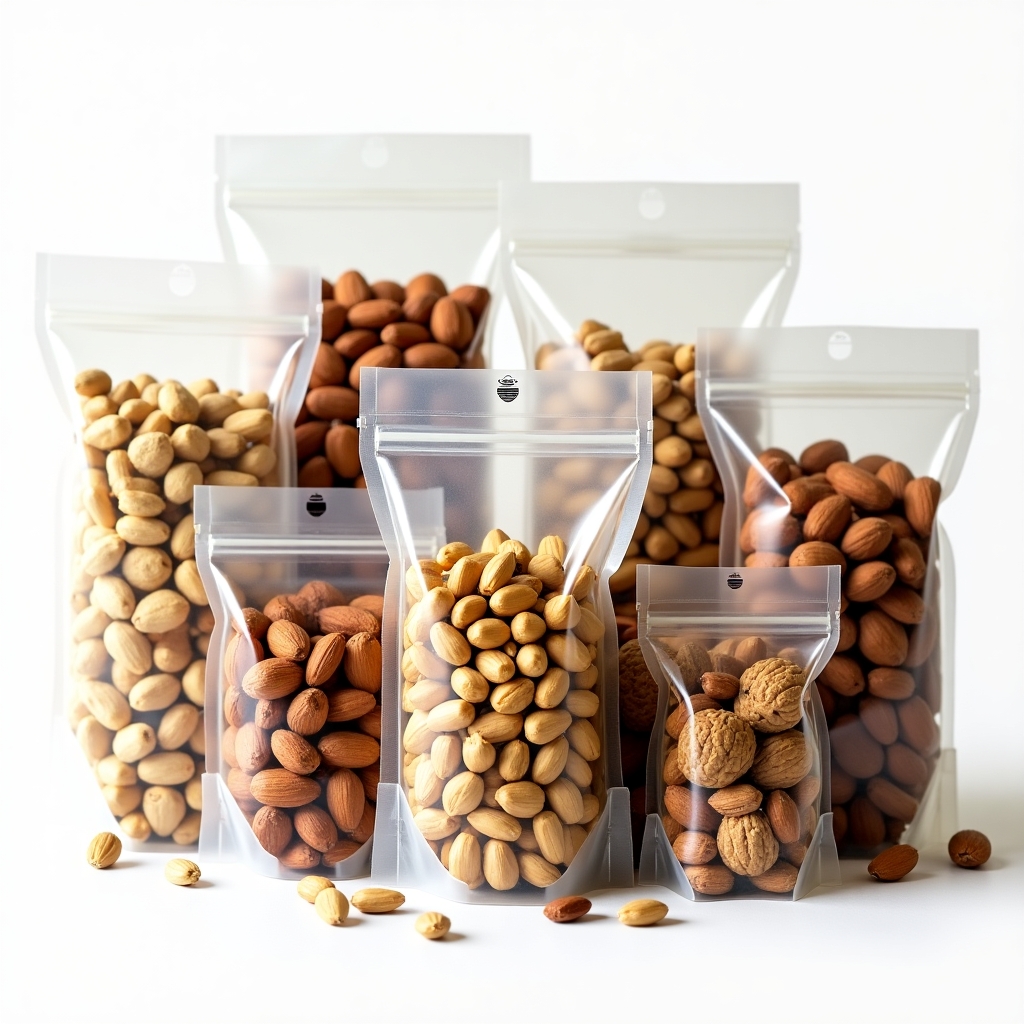
Clear Windows: Allow consumers to see the snack inside, building trust and showcasing quality (e.g., colorful dried fruit, perfectly seasoned chips).
Bold Branding: Prominent logos and brand colors that make the bag recognizable on shelves.
Informative Labeling: Clear display of key information: flavor, ingredients, nutritional facts, expiration date, and certifications (organic, gluten-free, non-GMO).
Sustainable Messaging: If the bag is eco-friendly (recyclable, compostable), highlight this on the packaging—67% of consumers are willing to pay more for sustainable products (Nielsen).
