




Flexible pouches have reshaped how brands package everything from snacks to skincare. Lighter than rigid containers, easier to ship, and often cheaper to produce, these pouches give manufacturers room to experiment with shape, closure style, and branding. For companies trying to decide which packaging format suits their product line, understanding the differences between spouted designs, shelf-stable stand-up formats, and fully bespoke options makes the decision much easier.
This article breaks down the practical differences between pouch types, explains when a spout closure makes sense, and offers a side-by-side comparison to help packaging buyers make a confident choice.
Why Businesses Are Moving Away From Rigid Containers
Rigid bottles and jars still have their place, but flexible pouches solve problems that hard packaging cannot. They use less plastic per unit of product, which lowers freight weight and reduces warehouse footprint. A pouch also collapses as its contents are used, giving consumers a visual cue for how much product remains.
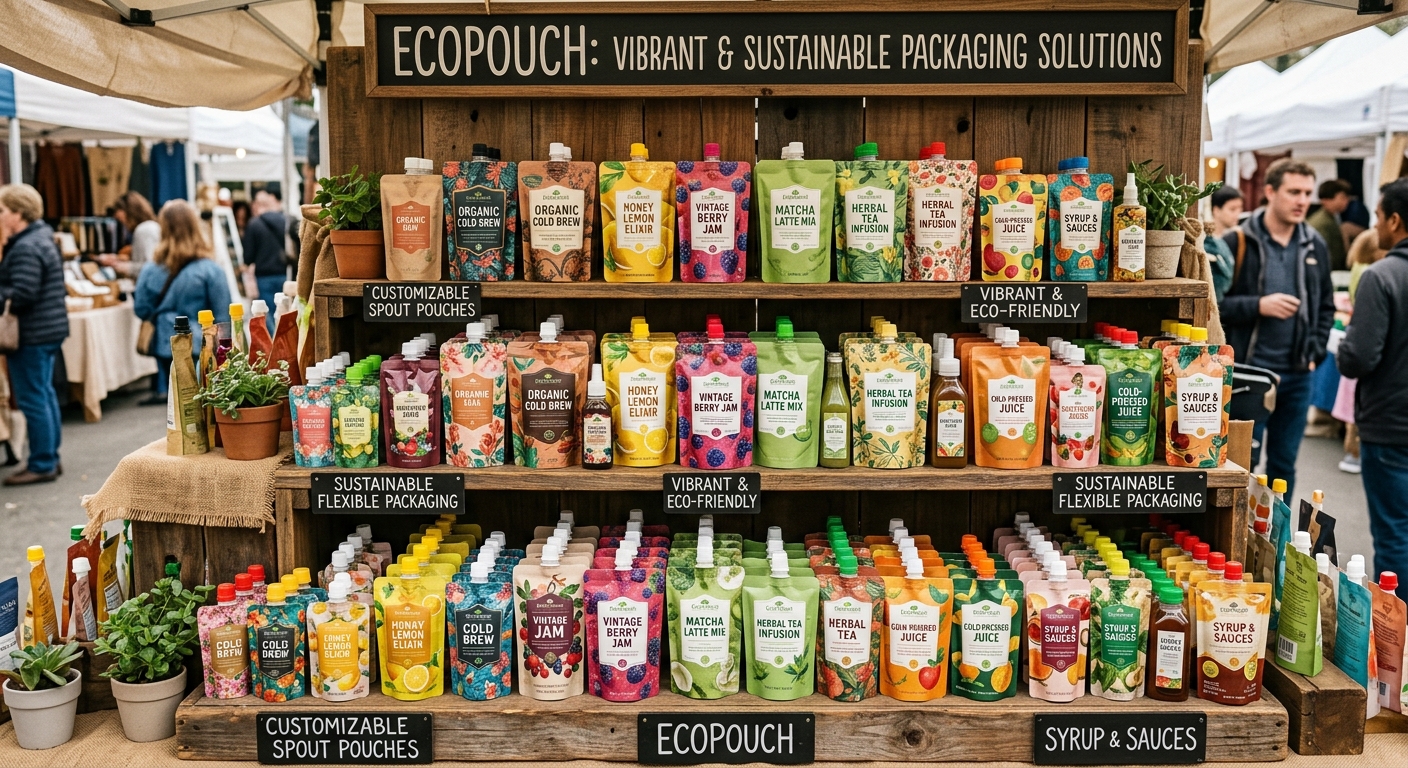
For liquids, purées, and pourable products, a spout closure adds convenience without sacrificing the lightweight benefits of film packaging. A pouch fitted with a stand up pouch spout lets a consumer pour, reseal, and store the product upright between uses, which is especially useful for items like juice, sauces, or liquid detergent.

What Makes a Spouted Pouch Design Effective?
A spouted pouch isn't simply a bag with a plastic fitting glued on. The spout placement, cap torque, and seal integrity all affect whether the product leaks, whether the cap cross-threads during capping, and whether the pouch stands upright on a retail shelf.
Three design factors matter most:
Spout position: Centered or off-center placement changes how the pouch pours and how it balances when standing.
Material compatibility: The film layers need to bond cleanly with the spout fitting to prevent seal failure.
Cap type: Flip-top, screw-cap, and tamper-evident closures each suit different product categories and shelf environments.
Manufacturers that specialize in flexible packaging, such as Zhongshan-based Maixin Packaging (www.maixinpackingtech.com), typically test seal strength and drop resistance before a spouted design goes into full production. According to the company's own facility description, its plants run quality checks using nine dedicated inspection machines alongside 26 bag-making lines, which points to how many touchpoints a pouch passes through before it reaches a buyer.
How Customization Changes the Packaging Equation
Generic pouches work fine for commodity products, but brands competing on shelf appeal usually need something built around their specific product and audience. A customized stand up pouch can be adjusted for size, gusset width, print finish, and closure type, which means a tea brand and a pet food brand can both use the same base pouch format while ending up with completely different looking packages.
Customization isn't limited to graphics. Film structure also changes based on what the pouch holds. A moisture-sensitive snack needs a different barrier layer than a chemical powder or a liquid soap refill. Working with a supplier that controls its own film blowing, rather than outsourcing it, generally shortens the back-and-forth needed to get the barrier properties right.
Comparing Common Flexible Pouch Formats
The table below outlines how the main pouch styles differ in typical use case, closure, and shelf behavior.
Pouch Format | Typical Products | Common Closure | Shelf Behavior |
|---|---|---|---|
Pillow Pouch | Snacks, candy | Heat seal | Lies flat, lower shelf visibility |
Stand-Up Pouch | Coffee, pet food, powders | Zipper or heat seal | Stands upright, strong shelf presence |
Spouted Pouch | Juice, sauces, liquid soap | Screw cap or flip-top | Stands upright, pourable and resealable |
Flat-Bottom Pouch | Premium snacks, coffee | Zipper | Wide base, display-ready |
Brands selling pourable liquids tend to favor spouted formats specifically because the stand up pouches with spouts combine upright shelf presence with the resealability that bottles offer, without the added shipping weight of glass or rigid plastic.
Choosing the Right Supplier for Packaging Needs
Not every packaging supplier handles every stage of production in-house. Some only print and laminate film that's produced elsewhere, while others, like Maixin Packaging, operate film blowing, printing, lamination, and bag-making under one roof. A vertically integrated setup generally means fewer handoffs between vendors and tighter control over material consistency from batch to batch.
Buyers evaluating a potential supplier should ask about minimum order quantities, lead times for custom tooling, and whether sample runs are available before committing to a full production order. A packaging partner based near a major port, such as one operating out of Guangdong, China, can also simplify export logistics for international buyers.
Frequently Asked Questions
How much does custom pouch packaging typically cost?
Pricing depends on film structure, print complexity, order volume, and whether a spout fitting is included. Multi-layer barrier films and multi-color printing raise the per-unit cost, while larger order volumes usually bring the per-unit price down.
How long does it take to produce a custom pouch order?
Lead times vary by supplier, but most custom runs require time for artwork approval, film production, and sample confirmation before the full batch is manufactured. Buyers working with new suppliers should expect a longer first order while tooling and approvals are finalized.
What are the alternatives to spouted pouches for liquid products?
Rigid bottles, cartons, and pillow pouches with a separate pour spout are common alternatives. Each trades off differently on shipping weight, shelf stability, and reseal convenience.
Who typically needs a customized pouch rather than a standard one?
Brands trying to stand out visually, or products requiring a specific barrier property (like extra moisture protection), generally benefit most from a custom build rather than an off-the-shelf pouch.
Are flexible pouches recyclable?
Recyclability depends on the film structure. Mono-material films are increasingly available and designed to be more recyclable than traditional multi-layer laminates, though local recycling infrastructure still affects the outcome.
Making the Right Packaging Call
Choosing between pouch formats comes down to what the product needs to survive shipping and what the customer needs at the point of use. A liquid that benefits from one-handed pouring and resealing usually calls for a spout; a dry good that needs shelf visibility and a resealable top often does better in a standard stand-up format. In short, a pourable liquid product generally performs best in a pouch fitted with a stand up pouch spout, since it balances upright display with everyday convenience, and brands aiming for shelf differentiation typically get the most value from working with a packaging partner that can handle both film production and custom print design under one process.
