




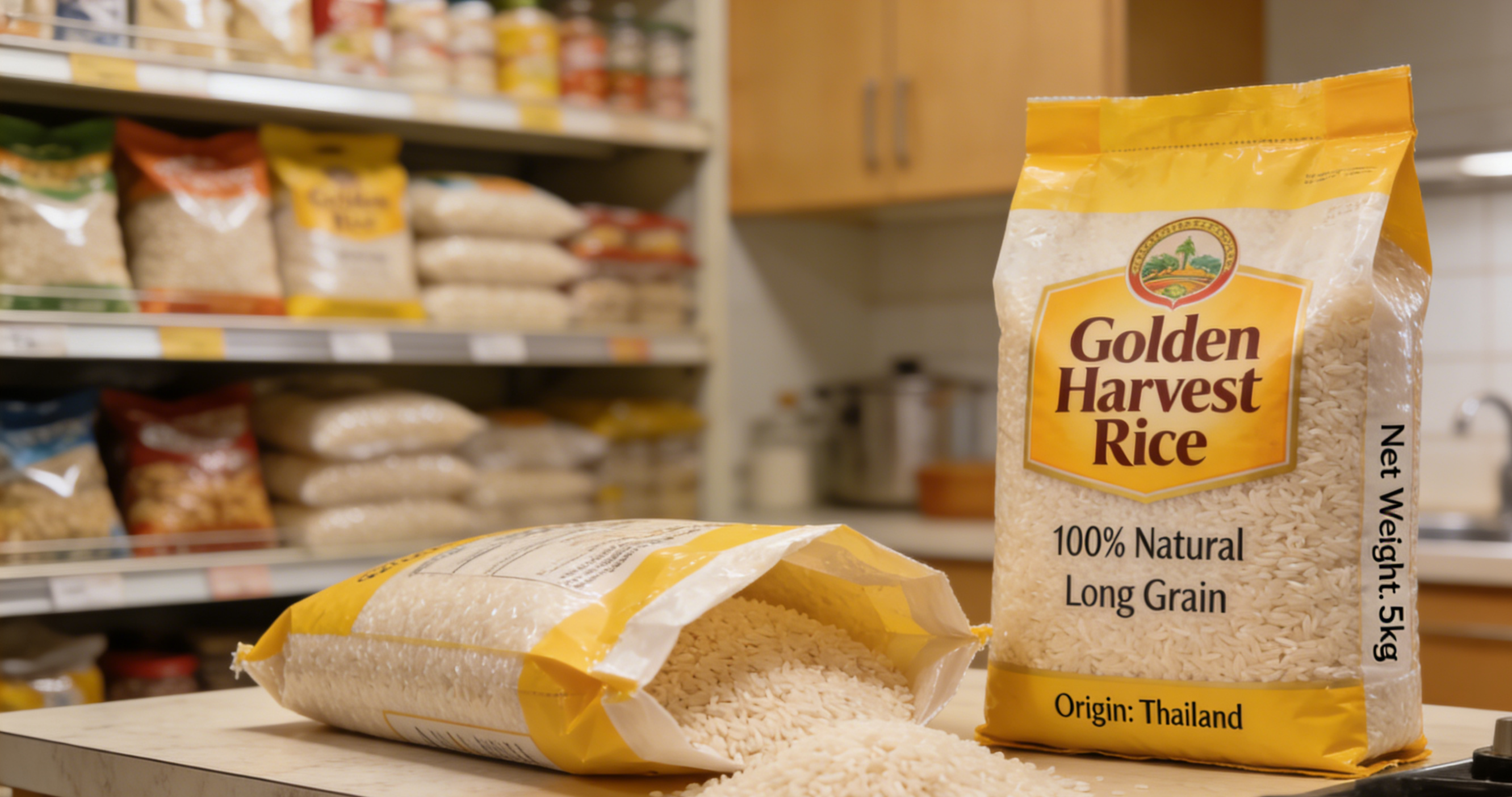
As a staple food feeding billions globally, rice requires reliable packaging to preserve its quality, prevent contamination, and facilitate transportation. Rice packaging bags are far more than simple containers—they integrate functional protection, branding communication, and environmental responsibility to meet diverse market demands. From traditional plastic sacks to cutting-edge biodegradable solutions, the evolution of rice packaging bags reflects the industry’s response to consumer needs, regulatory requirements, and ecological challenges. This article explores the key materials, core functions, customer-centric designs, and sustainable innovations shaping the future of rice packaging.
1. Common Materials of Rice Packaging Bags (Table Comparison)
The choice of material directly determines the performance, cost, and environmental impact of rice packaging bags. Below is a detailed comparison of mainstream materials, their characteristics, and application scenarios:
Material Type | Key Characteristics | Advantages | Limitations | Ideal Applications |
Polypropylene (PP) Woven Bags | High strength, tear-resistant, breathable, cost-effective | Withstands heavy loads (5–50kg), moisture-resistant, compatible with printing | Non-biodegradable, vulnerable to UV degradation | Bulk storage, wholesale distribution, industrial use |
Kraft Paper Bags | Recyclable, natural appearance, printable, often lined with biopolymers | Eco-friendly, premium aesthetic for organic brands, reusable | Less durable in humid environments, lining may reduce biodegradability | Retail packaging, organic rice, eco-conscious consumers |
Canvas Bags | Heavy-duty cotton fabric, durable, reusable, excellent printability | Premium artisanal look, repurposable for storage/shopping | Higher production cost, requires moisture-proof lining | Gourmet rice, gift sets, high-end retail |
Biodegradable Polymers | Rice-based/banana fiber/PEA materials, fully degradable in 100–365 days | Zero microplastic residue, uses agricultural waste, low carbon footprint | Higher initial cost, limited mass production capacity | Sustainable brands, eco-markets, export products |
Laminated Aluminum Foil Bags | Multi-layer structure (PET/NY/PE), excellent barrier against light/oxygen/moisture | Extends shelf life, prevents lipid oxidation, preserves freshness | Complex recycling process, higher material cost | Fresh rice, premium varieties, long-distance transportation |
2. Core Functions of Rice Packaging Bags
Rice packaging bags must fulfill six essential functions to ensure product integrity and consumer satisfaction.
Protection stands as the primary function: effective packaging shields rice from moisture absorption, pest infestation, physical damage, and microbial growth—key factors causing spoilage. For example, multi-layer laminated bags block oxygen and light to slow down lipid oxidation, while PP woven bags resist rodent bites during storage.
Communication is another critical role: packaging serves as a marketing tool to display brand logos, product information (origin, grade, expiration date), and usage guidelines. Clear printing enhances brand visibility and helps consumers make informed choices.
Convenience features such as resealable zippers, tear strips, and handles improve user experience by facilitating storage, opening, and carrying.
Containment ensures the rice remains secure during transportation, with sturdy seams and sufficient load-bearing capacity preventing spillage.
Traceability and tamper indication are increasingly important, allowing consumers to track production processes and verify product authenticity.

3. Customer-Centric Design Strategies
To meet diverse user needs, rice packaging bags are designed with scenario-specific features tailored to different customer groups.
For household consumers, small-capacity bags (1kg, 2.5kg, 5kg) with resealable closures are preferred to avoid waste and ensure freshness after opening. These bags often include storage tips and easy-grip handles for daily use.
Food service and industrial clients require large-scale packaging (10–50kg) with high durability and cost-effectiveness. PP woven bags with PE liners are commonly used here, featuring forklift-friendly designs and tear strips for efficient handling.
Premium and gift markets demand aesthetic appeal and cultural resonance. Packaging may use kraft paper with hot stamping, bamboo fiber composites, or vacuum-sealed aluminum foil inner bags to highlight product value. Some luxury sets include cards (traceability cards) and cooking guides to enhance the gifting experience.
Special needs are addressed through innovative designs: portable 500g vacuum packs for camping, 100–200g portioned bags for weight management, and moisture-absorbing liners for humid regions like Southeast Asia.
4. Sustainable Innovations Shaping the Future
Against the backdrop of global plastic pollution and carbon neutrality goals, sustainable innovations are revolutionizing rice packaging bags.
Korea has pioneered rice-based biodegradable bags using non-edible rice (e.g., stale or low-quality grains) as raw materials. These bags decompose completely in 100 days under natural conditions, with 40% lower energy consumption during production compared to traditional plastic bags.
The Philippines transforms banana waste into compostable sacks, which are woven from banana stem fibers and break down naturally in soil within weeks, supporting rural circular economies.
Thailand’s "Royal Umbrella" brand has launched fully recyclable mono-material polyethylene bags using Dow’s Innate™ resins, reducing plastic usage by 300 metric tons annually and cutting carbon emissions by 600 tons.
These innovations share a common logic: balancing biodegradability with practicality, using agricultural waste as raw materials, and adapting to existing production infrastructure to lower industrialization barriers.
Conclusion
Rice packaging bags play a pivotal role in the global food supply chain, bridging production, distribution, and consumption. From material selection to functional design, every aspect is optimized to address quality preservation, user convenience, and environmental responsibility. As consumers increasingly prioritize sustainability and regulators tighten plastic restrictions, the industry will continue to innovate—moving beyond single-use plastics toward circular solutions that minimize waste and maximize resource efficiency. The future of rice packaging bags lies in harmonizing performance, cost, and ecology, ensuring that this essential food packaging remains both reliable and responsible for generations to come.
