




Choosing the right pouch for loose leaf or bagged tea protects aroma, extends shelf life, and shapes how customers perceive a brand on the shelf. Material barrier properties, closure type, and bag structure all influence freshness retention and presentation. This guide breaks down the materials, structures, and design choices that matter most when selecting packaging for tea brands of any size.
Understanding Material Barrier Properties for Freshness
Tea is highly sensitive to moisture, light, and oxygen, all of which accelerate flavor loss. A strong barrier layer—typically a combination of PE, PET, and aluminum foil—keeps these elements out and preserves the tea's natural aroma for longer. Manufacturers that specialize in packaging food bags often laminate multiple film layers together to achieve this protection without compromising flexibility or print quality.
The lamination process also affects how well a pouch resists punctures during shipping and handling. Multi-layer films reduce the risk of tears, which is especially important for loose leaf tea that can spill if the seal integrity fails. Brands sourcing from an experienced manufacturer can request barrier testing data to confirm shelf-life claims before committing to a production run.
Common Bag Structures for Tea Products
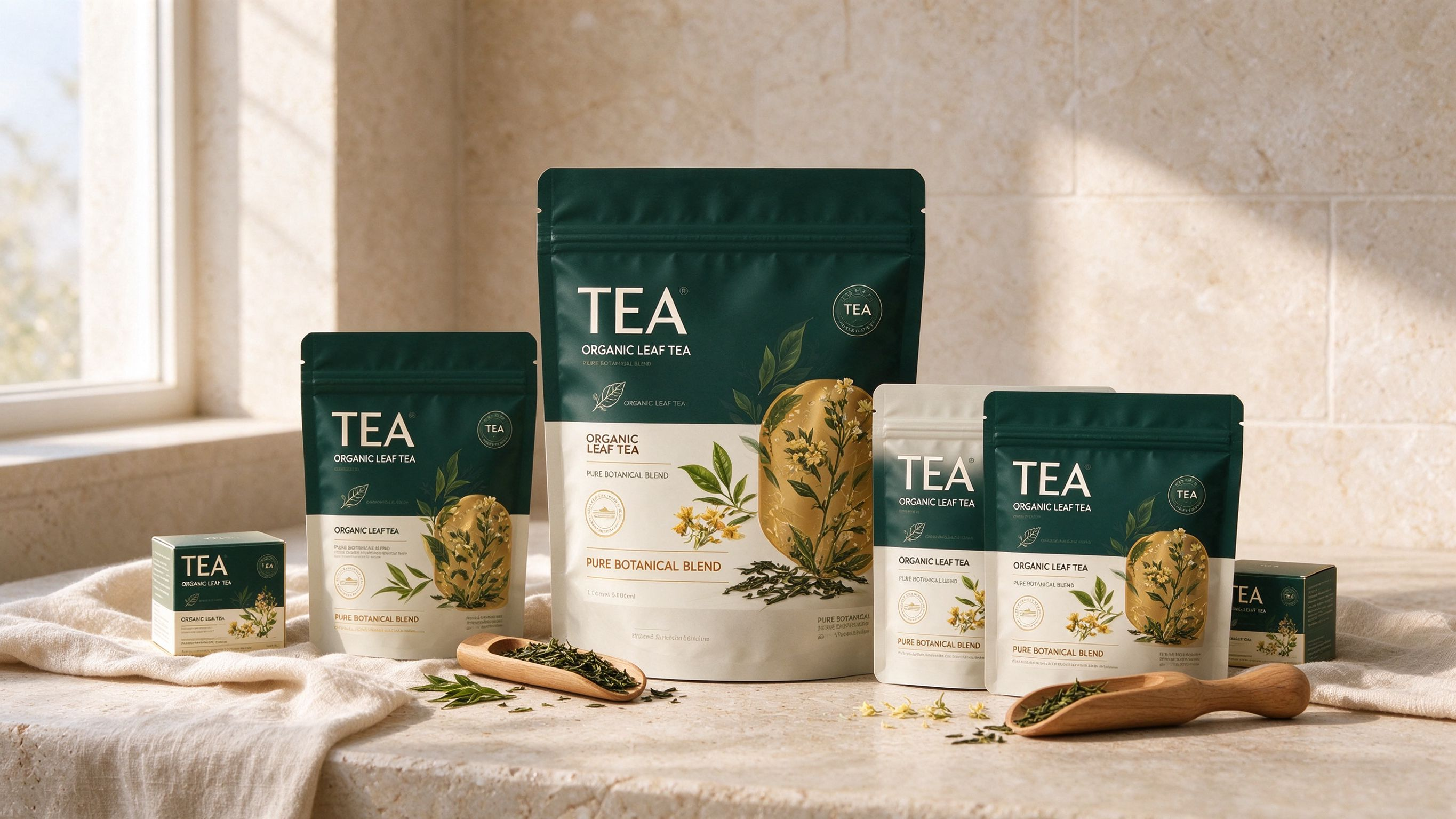
Different tea formats call for different pouch structures. Matching the bag style to the product type improves both function and shelf presence.
Stand-up pouches: Self-supporting bags with a gusseted bottom that display well on retail shelves and often include a resealable zipper.
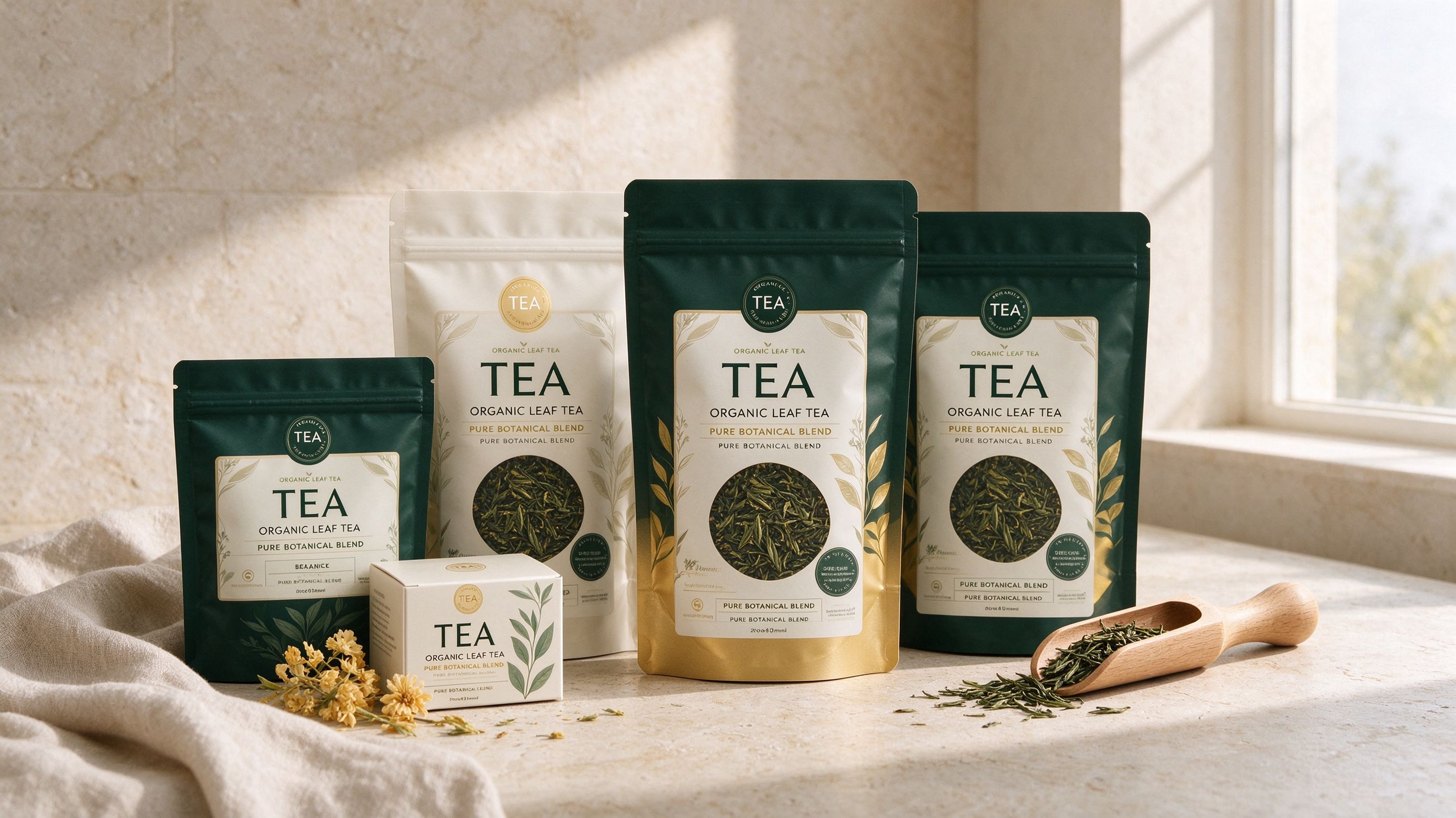
Flat bottom packages: A structure with a wide, flat base that maximizes shelf stability and label visibility, popular for premium loose leaf blends.
Spout bags: Used less frequently for tea but common for liquid tea concentrates or extracts, offering controlled pouring.
Flat pouches: A simple, cost-effective option for single-serve tea bags sold in boxes or smaller sachets.
Vacuum bags: Remove air entirely to extend shelf life for bulk or wholesale tea shipments.
Each structure carries trade-offs between cost, shelf appeal, and protective performance, so brands should weigh product volume and retail placement before finalizing a choice.
Printing and Branding Considerations
The exterior of a tea pouch often determines whether a shopper picks it up. High-resolution gravure or digital printing allows for detailed artwork, gradient colors, and matte or glossy finishes that reflect a brand's identity. Many suppliers offering tea packages also provide design support, helping brands translate a logo or color palette into a print-ready file suitable for large-scale production.
Finish options matter too. A soft-touch matte film conveys a premium, artisanal feel, while a glossy finish can make colors pop for a more vibrant, youthful brand. Window cutouts are another popular feature, letting customers see the tea leaves inside without opening the bag, which can build trust in product quality.
Closure Types and Their Functional Benefits
The way a pouch closes affects both convenience and freshness retention after the first use. Below is a comparison of the most common closure types used across tea packaging formats.
Closure Type | Best Suited For | Key Benefit |
|---|---|---|
Zipper (resealable) | Loose leaf tea, bulk bags | Maintains freshness between uses |
Heat seal (tin-tie or fin seal) | Single-use sachets | Low cost, simple production |
Spout with cap | Liquid tea concentrates | Controlled, mess-free pouring |
Fold-over with sticker | Small-batch or gift tea | Adds a handcrafted, boutique feel |
Zipper closures are generally favored for everyday loose leaf tea since they let consumers reseal the bag repeatedly without losing the barrier's effectiveness. Heat-sealed formats work well for single-serve products where resealing isn't necessary.
Sustainability Options in Tea Packaging
Sustainability has become a meaningful factor for tea brands targeting eco-conscious consumers. Compostable films made from materials like PLA or kraft paper laminates are increasingly available as alternatives to traditional plastic-based structures. These options can reduce environmental impact, though they sometimes carry shorter shelf-life windows compared to standard multi-layer films.
Recyclable mono-material pouches are another emerging option. By using a single type of plastic resin throughout the bag, these pouches simplify recycling while still providing adequate barrier protection for short-to-medium shelf-life products. Brands evaluating sustainable packaging should ask suppliers for shelf-life test results specific to the eco-friendly material in question, since performance can vary significantly between vendors.
Working with a Packaging Manufacturer
Selecting a reliable manufacturing partner streamlines the process from design to delivery. Look for a supplier with in-house printing, lamination, and bag-forming equipment, since this vertical integration typically shortens lead times and reduces per-unit costs on larger orders. Facilities equipped with online inspection machines and dedicated quality control stations can also catch defects before bags reach a customer's warehouse.
It's worth requesting physical samples before committing to a full production run. Samples reveal how the film feels, how the print colors translate on the finished bag, and how well the closure performs in practice. A manufacturer experienced with flat bottom packages and other specialty structures can usually turn around samples within a few weeks, giving brands time to adjust specifications if needed.
Frequently Asked Questions
What is the typical minimum order quantity for custom tea pouches?
Minimum order quantities vary by manufacturer and bag structure, but many suppliers set thresholds between a few thousand and tens of thousands of units for custom-printed designs. Smaller test runs may be available at a higher per-unit cost.
How long does tea stay fresh in a sealed pouch?
Properly sealed tea in a high-barrier pouch can typically stay fresh for 12 to 24 months, depending on the film's barrier properties and storage conditions. Exposure to light, heat, or repeated opening shortens this window considerably.
Can tea packaging be customized with unique shapes or window cutouts?
Yes, most manufacturers offer customization options including die-cut windows, unique gusset shapes, and varied bag heights. These features are usually built into the tooling during the design phase, so they should be specified early in the ordering process.
What's the difference between a stand-up pouch and a flat bottom pouch for tea?
A stand-up pouch has a gusseted base that allows it to stay upright with moderate stability, while a flat bottom pouch has a wider, more rigid base designed for maximum shelf presence and stability. Flat bottom designs are often chosen for premium retail positioning.
Are compostable tea pouches as durable as plastic-based options?
Compostable pouches generally offer slightly lower barrier performance and shelf life compared to traditional multi-layer plastic films, though material science in this space continues to improve. Brands should request shelf-life testing data specific to the compostable material being considered.
Conclusion
Selecting the right tea pouch involves balancing barrier performance, structural design, closure type, and sustainability goals against a brand's budget and retail strategy. Working closely with an experienced manufacturer—one capable of producing everything from everyday packaging food bags to specialty flat bottom packages—helps ensure the final product protects freshness while standing out on the shelf. In short, the best tea packaging choice comes down to understanding the product's shelf-life needs, the brand's visual identity, and the practical trade-offs between cost, sustainability, and shelf presence, so that every decision supports both product quality and long-term customer trust.
