




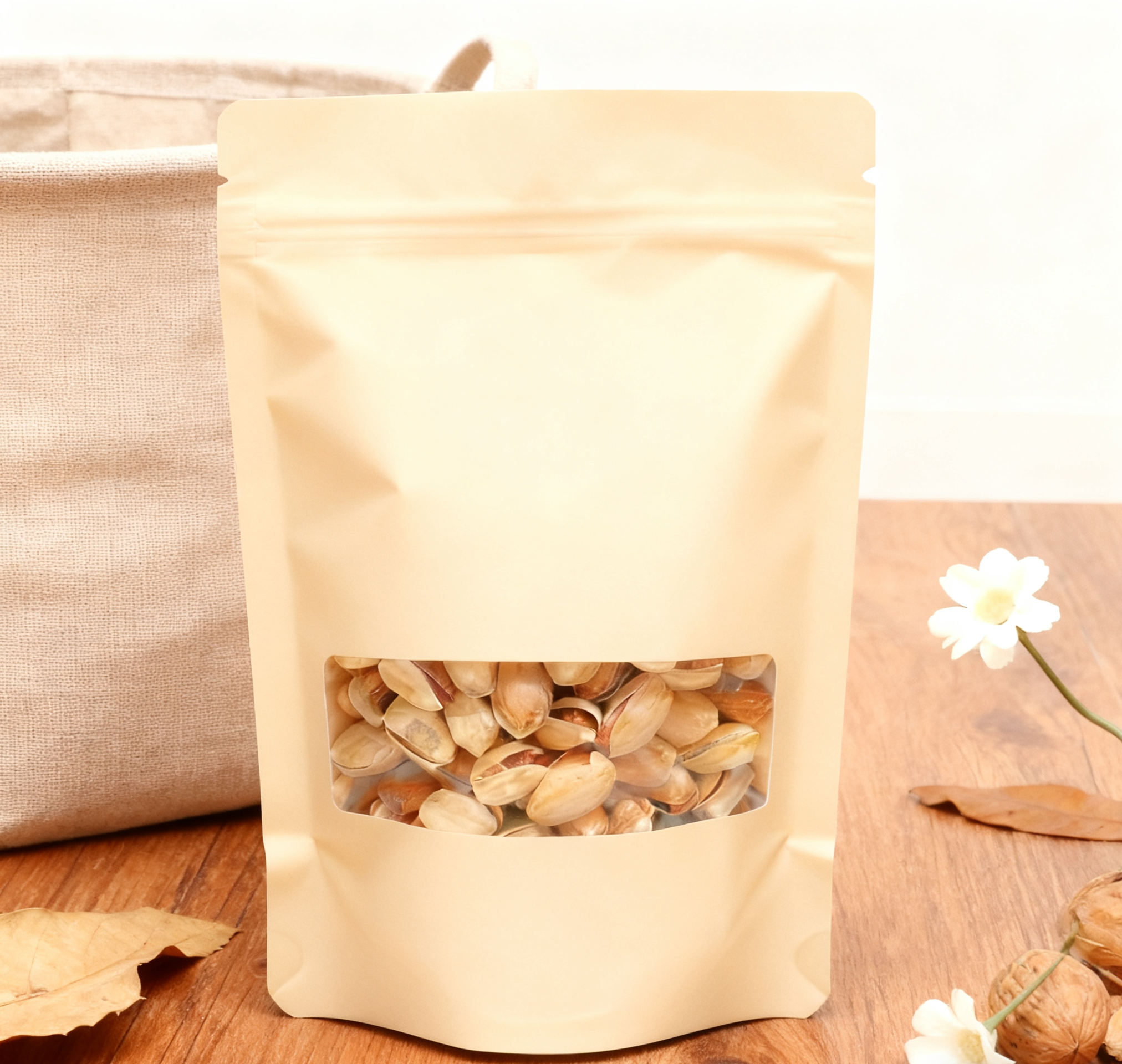
Food bags are the unsung heroes of the food industry—protecting products from contamination, extending shelf life, and enabling safe, convenient distribution. As the global food market expands (valued at $9.8 trillion in 2024 by Statista), the demand for reliable, high-quality food bags continues to surge. The global food packaging bags market alone is projected to reach $218.3 billion by 2029, with a CAGR of 5.3%, driven by urbanization, on-the-go consumption, and stringent food safety regulations.
This article explores three core pillars that define top-tier food bags manufacturers: technological expertise and production capabilities (the foundation of reliable, high-performance products), rigorous quality control and global compliance (non-negotiables for food contact materials), and customer-centric customization and end-to-end service (the key to meeting diverse market needs). For visitors to your food plastic bags independent station—whether seeking a long-term manufacturing partner or a one-time custom order—these insights will clarify what to look for in a manufacturer and highlight the value of partnering with a leader in the space. By focusing on these pillars, we aim to position your independent station as a trusted resource for connecting with manufacturers that deliver on quality, compliance, and customization.
1. Technological Expertise and Production Capabilities: The Backbone of Reliable Manufacturing
Top food bags manufacturers distinguish themselves through cutting-edge technology, advanced production infrastructure, and a commitment to innovation. In an industry where precision, efficiency, and consistency are critical, manufacturing capabilities directly impact product quality, delivery timelines, and cost competitiveness. Whether producing high-barrier bags for perishables, recyclable bags for sustainable brands, or custom-printed bags for retail, manufacturers must invest in the right tools, materials, and processes to meet diverse customer needs.
1.1 Advanced Production Technology and Automation
- Film Extrusion Lines: The foundation of plastic food bags is the film, and advanced extrusion lines produce high-quality, uniform films with precise thickness (typically 15-100 microns) and barrier properties. Twin-screw extruders, for example, enable the blending of resins (e.g., PE, PP, EVOH) and additives (e.g., UV stabilizers, antibacterial agents) to create custom films tailored to specific needs. For instance, a 3-layer co-extrusion line can produce PE/EVOH/PE films with exceptional oxygen and moisture barrier, ideal for meat or cheese packaging. Top manufacturers use extrusion lines with real-time thickness monitoring (via laser sensors) to ensure variation is within ±5%, a critical factor for consistent barrier performance.
- Printing Technology: Food bags often serve as branding tools, requiring high-quality, food-safe printing. Leading manufacturers use flexographic or digital printing technologies that comply with food contact standards (e.g., FDA 21 CFR 176.170 for inks). Flexographic printing is ideal for high-volume orders (100,000+ units), offering fast speeds (up to 300 meters per minute) and vibrant colors. Digital printing, by contrast, suits small-batch, custom orders (1,000-10,000 units) with minimal setup time and variable data capabilities (e.g., personalized labels). Both technologies use food-safe, low-migration inks to avoid contamination—critical for direct food contact applications.
- Automated Converting and Sealing: Converting (cutting, folding, sealing) is where extruded film becomes finished bags. Automated converting lines use robotic arms and precision cutting tools to produce bags of consistent size and shape, with seal strength tested in real time. Heat-sealing technologies—including impulse sealing and ultrasonic sealing—create airtight, leak-proof seals that prevent moisture and oxygen ingress. For example, ultrasonic sealing is ideal for thick films or laminated materials, producing strong seals without damaging the barrier layer. Automated lines also reduce human error: a fully automated facility can achieve a defect rate of less than 0.1%, compared to 2-3% for manual production.
- Smart Manufacturing Integration: The latest trend in food bag manufacturing is Industry 4.0 integration—using IoT sensors, AI, and data analytics to optimize production. IoT sensors monitor temperature, pressure, and material flow in extrusion and printing lines, alerting operators to deviations before they impact quality. AI-powered quality control systems use computer vision to inspect every bag for defects (e.g., pinholes, uneven seals, printing errors) at speeds of up to 500 bags per minute. Data analytics tools track production efficiency, material usage, and delivery times, enabling manufacturers to reduce waste (by up to 15%) and shorten lead times (by 20-30%).
Case Study: Amcor’s Smart Manufacturing Facility in Ohio, USAAmcor—one of the world’s largest food packaging manufacturers—operates a smart facility for food bag production that integrates IoT and AI. The facility’s extrusion lines use real-time sensor data to adjust resin blending, ensuring consistent barrier properties. Computer vision systems inspect 100% of finished bags, identifying defects that are invisible to the human eye. The result: a 99.9% on-time delivery rate, 12% reduction in material waste, and the ability to produce 500 million food bags annually.
1.2 Material Innovation and Sustainable Solutions
1.3 Scalable Production and Reliable Delivery
- Production Capacity: Leading facilities have multiple production lines (extrusion, printing, converting) that can operate 24/7, with a total capacity of 500 million+ bags annually. This allows them to handle large orders (e.g., 5 million grocery bags for a supermarket chain) while still accommodating small-batch custom orders (e.g., 5,000 branded snack bags for a local bakery). Scalable capacity also ensures flexibility: if a customer needs to increase order volume or rush a shipment, the manufacturer can reallocate resources to meet the demand.
- Supply Chain Resilience: Reliable delivery depends on a resilient supply chain for raw materials. Top manufacturers partner with multiple resin suppliers (domestic and international) to avoid shortages, and maintain safety stocks of key materials (e.g., food-grade PE, PCR resin) to handle unexpected demand. They also optimize logistics—using local distribution centers for regional customers and global shipping partners for international orders—to reduce lead times. For example, a manufacturer with facilities in Asia, Europe, and North America can deliver to customers in those regions within 7-14 days, compared to 3-4 weeks for single-location manufacturers.
- Quality Consistency Across Batches: Scalability must not come at the cost of quality. Leading manufacturers implement strict process controls to ensure consistency across batches—whether producing 10,000 or 10 million bags. This includes standardized operating procedures (SOPs) for every production stage, regular calibration of equipment, and batch testing of finished products. Each batch is assigned a unique lot number, enabling traceability from raw material to delivery. If a quality issue arises, the lot number allows the manufacturer to quickly identify and recall affected products, minimizing risk for the customer.
2. Rigorous Quality Control and Global Compliance: Non-Negotiables for Food Safety
Food bags are classified as food contact materials (FCMs), meaning they directly interact with food and pose a potential risk of contamination if not properly manufactured. For this reason, quality control (QC) and regulatory compliance are the most critical priorities for food bags manufacturers. Top-tier manufacturers implement end-to-end QC processes and adhere to global standards to ensure their bags are safe, compliant, and fit for purpose. For customers, partnering with a compliant manufacturer reduces regulatory risk, protects brand reputation, and ensures consumer safety.
2.1 Global Regulatory Compliance: Meeting Regional Standards
- U.S. Regulations: The U.S. Food and Drug Administration (FDA) governs food contact plastics under 21 CFR Part 177. Key requirements include:
Limits on migration of harmful substances (e.g., heavy metals, plasticizers, monomers) into food. For example, 21 CFR 177.1520 limits total organic migration from PE to 60 mg/dm².
Approval of resins and additives for food contact (e.g., BPA is prohibited in infant food packaging).
Labeling requirements (e.g., “For Food Use Only,” recycling symbols, usage instructions).
Manufacturers must register with the FDA and maintain records of material safety data sheets (MSDS) and test results.
- EU Regulations: The EU’s primary regulation for food contact plastics is Regulation (EC) No 10/2011. Key requirements:
Migration limits for individual substances (e.g., DEHP < 0.1 mg/kg of food) and overall migration (< 60 mg/kg of food).
A positive list of approved substances (only substances listed in Annex I can be used in food contact plastics).
Labeling requirements (e.g., “Food Contact” in multiple languages, recycling symbols, “Green Dot” logo for recyclable materials).
Compliance with REACH (Registration, Evaluation, Authorization, and Restriction of Chemicals) for substances used in production.
- China Regulations: China’s food contact plastics are governed by the GB 4806 series of standards, including GB 4806.7-2016 (plastic containers and packaging) and GB 4806.11-2021 (plastic materials for infant food contact). Key requirements:
Strict limits on migration of heavy metals (lead < 1 mg/kg, cadmium < 0.05 mg/kg) and plasticizers (DEHP < 0.3 mg/kg).
Mandatory third-party certification for infant food packaging.
Labeling in Mandarin (e.g., material composition, usage temperature, recycling information).
Compliance with China’s Plastic Pollution Control Action Plan (e.g., restrictions on single-use plastics, requirements for recyclable materials).
- Other Regional Standards: Top manufacturers also comply with standards for specific markets, such as:
Japan’s JIS Z 1707 (food contact plastics).
Australia’s FSANZ (Food Standards Australia New Zealand) Code.
Brazil’s ANVISA (National Health Surveillance Agency) regulations.
Case Study: Mondi’s Compliance for Global MarketsMondi—a European-based food packaging manufacturer—produces food bags that comply with 20+ regional standards. For a customer selling snack bags in the U.S., EU, and China, Mondi’s bags meet FDA 21 CFR 177.1520, EU 10/2011, and GB 4806.7-2016. The manufacturer provides the customer with a comprehensive compliance package, including migration test reports, material safety data sheets, and third-party certification documents. This enables the customer to launch the product in all three markets without regulatory delays.
2.2 End-to-End Quality Control Processes
- Raw Material Inspection: The quality of food bags starts with the raw materials. Manufacturers inspect every batch of resin, ink, and additive before it enters production. Key tests include:
Resin purity: Testing for contaminants (e.g., heavy metals, foreign particles) using inductively coupled plasma (ICP) spectroscopy.
Ink safety: Testing for migration of ink components using food simulants (water, acetic acid, ethanol) per FDA or EU methods.
Additive compliance: Verifying that additives (e.g., UV stabilizers, antibacterial agents) are approved for food contact.
Only materials that pass inspection are released for production; non-compliant materials are rejected and returned to the supplier.
- In-Process Quality Control: During production, QC technicians monitor key parameters at every stage to ensure consistency:
Extrusion: Measuring film thickness (via laser sensors) and barrier properties (MVTR, OTR) of sample films.
Printing: Inspecting print quality (color accuracy, sharpness, absence of smudges) and verifying that inks do not migrate to the food contact side.
Converting: Testing seal strength (via peel tests), bag dimensions (length, width, gusset), and closure functionality (zipper strength, tear resistance).
In-process QC is conducted at regular intervals (e.g., every 30 minutes for high-volume production), with any deviations addressed immediately (e.g., adjusting seal temperature, stopping production to clean equipment).
- Finished Product Testing: Every batch of finished food bags undergoes a battery of tests to ensure safety, performance, and compliance. Key tests include:
Migration testing: Using food simulants to measure the migration of substances from the bag to food. Tests are conducted at different temperatures and contact times to simulate real-world use (e.g., 40°C for 10 days for refrigerated foods, 100°C for 2 hours for hot foods).
Barrier testing: Measuring MVTR (ASTM D1653) and OTR (ASTM D3985) to ensure the bag meets the product’s shelf life requirements.
Seal strength testing: Using a tensile tester to measure the force required to peel a seal (ASTM F88), ensuring it is strong enough to prevent leakage.
Drop testing: Dropping filled bags from a specified height (e.g., 1 meter) to test durability (ASTM D5276).
Microbial testing: Swabbing bags to ensure they are free from harmful bacteria (e.g., Salmonella, E. coli) per ISO 22000 standards.
Only batches that pass all tests are released for delivery; non-compliant batches are quarantined and either reworked or destroyed.
- Traceability and Documentation: Top manufacturers maintain detailed records of every batch, including:
Raw material lot numbers and supplier information.
Production parameters (temperature, speed, pressure) for each stage.
QC test results (migration, barrier, seal strength).
Delivery information (customer, order number, shipment date).
This traceability enables quick identification of issues if a customer reports a problem, and supports recalls if necessary.
Case Study: Reynolds Consumer Products’ QC ProcessReynolds—known for its food storage bags—implements a strict QC process that includes 20+ tests per batch. Raw materials are inspected for purity and compliance, with ICP spectroscopy testing for heavy metals. In-process QC checks film thickness every 15 minutes and seal strength every 30 minutes. Finished bags undergo migration testing using three food simulants (water, 3% acetic acid, 10% ethanol) and drop testing from 1.2 meters. The manufacturer maintains traceability records for 5 years, enabling full transparency for customers and regulators.
2.3 Certifications: Third-Party Validation of Quality and Compliance
- Food Safety Certifications:
ISO 22000: The global standard for food safety management systems, covering all aspects of production (raw material sourcing, processing, packaging, delivery).
FSSC 22000: A food safety certification recognized by the Global Food Safety Initiative (GFSI), widely accepted by retailers and food brands.
SQF (Safe Quality Food): A rigorous certification that combines food safety and quality management, required by many U.S. retailers (e.g., Walmart, Kroger).
- Environmental and Sustainability Certifications:
GRS (Global Recycled Standard) 4.0: Certifies that products contain recycled material (minimum 50%) and meet environmental and social criteria.
ISO 14001: The global standard for environmental management systems, ensuring manufacturers minimize their environmental impact (waste, energy use, emissions).
BRCGS Packaging Materials: A certification that combines food safety, quality, and environmental management, required by many European retailers.
- Regional Compliance Certifications:
FDA Registration: Mandatory for manufacturers selling food contact materials in the U.S.
EU REACH Compliance: Demonstrates compliance with EU chemical regulations.
China GB Certification: Mandatory for manufacturers selling food contact materials in China.
3. Customer-Centric Customization and End-to-End Service: Partnering for Success
In a crowded food market, brands need packaging that differentiates their products, meets their unique needs, and resonates with consumers. Top food bags manufacturers go beyond standard products to offer customized solutions and end-to-end service—acting as partners rather than just suppliers. From design and prototyping to production and after-sales support, they work closely with customers to deliver packaging that drives brand success.
3.1 Customization Capabilities: Tailoring to Brand and Product Needs
- Material Customization: Manufacturers work with customers to select the right material for their product’s shelf life, usage, and sustainability goals. This includes:
Choosing base resins (PE, PP, PET) based on flexibility, durability, and heat resistance.
Adding barrier layers (EVOH, PVDC) to extend shelf life (e.g., for oxygen-sensitive products like coffee or nuts).
Incorporating recycled or bio-based materials to meet sustainability targets (e.g., 30% PCR PE for a grocery chain’s private-label snacks).
Adding specialized additives (e.g., antibacterial agents for ready-to-eat foods, UV stabilizers for outdoor storage).
- Size and Shape Customization: Food bags come in endless sizes and shapes, and manufacturers can produce custom dimensions to fit the product’s volume and packaging needs. Options include:
Standard sizes (e.g., 10x15cm snack bags, 30x40cm grocery bags) with custom gussets (side or bottom) to increase capacity.
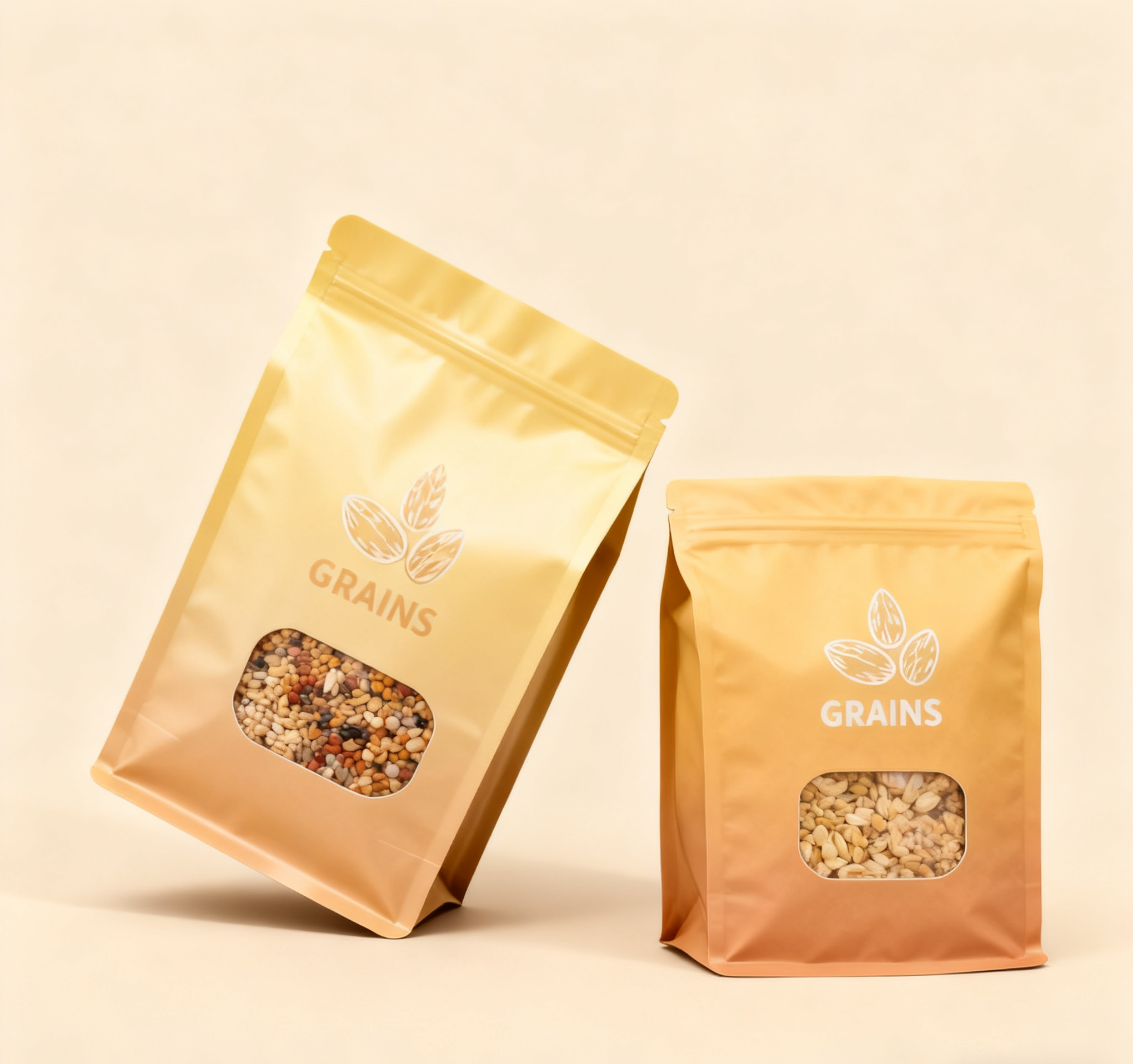
Unique shapes (e.g., stand-up pouches for powdered drinks, flat bags for sandwiches, quad-seal bags for pet food) to differentiate the product on shelves.
Custom thickness (15-100 microns) to balance durability and cost (e.g., thicker bags for heavy products like rice, thinner bags for lightweight snacks).
- Functional Customization: Manufacturers add functional features to enhance usability and product protection, including:
Closures: Resealable zippers (slider, press-to-seal), tear notches, drawstrings, or screw-on caps.
Dispensing features: Pour spouts, scoop holders, or pre-cut openings for easy access.
Tamper-evident features: Induction seals, tear strips, or shrink bands to ensure product integrity.
Specialized features: Microwave-safe seals, freeze-resistant materials, or transparent windows to showcase the product.
- Design and Printing Customization: Food bags are a key branding tool, and manufacturers offer high-quality printing to bring brands to life. Options include:
Full-color printing (up to 10 colors) using flexographic or digital technology.
Custom graphics (logos, product images, nutritional information) and text (multilingual labels for global brands).
Special finishes (matte, glossy, metallic, or embossed) to enhance visual appeal.
QR codes or barcodes for traceability, promotions, or consumer engagement.
3.2 End-to-End Service: From Prototyping to Delivery
- Design and Engineering Support: Many customers lack in-house packaging design expertise, so manufacturers provide dedicated design teams to help develop packaging solutions. Services include:
Consultation on material selection, size, and functionality based on the product’s needs (e.g., shelf life, storage conditions, target audience).
3D rendering of custom designs to help customers visualize the final product.
Engineering support to ensure the design is production-ready (e.g., optimizing seal placement, ensuring print alignment).
- Prototyping and Sample Testing: Before full production, manufacturers create prototypes or samples for customers to test. This includes:
Small-batch samples (10-100 units) for product compatibility testing (e.g., checking if the bag preserves freshness, fits the product properly).
Print samples to verify color accuracy and design quality.
Performance testing of samples (e.g., seal strength, barrier properties) to ensure they meet the customer’s requirements.
Prototyping allows customers to make adjustments before investing in full production, reducing the risk of costly mistakes.
- Flexible Production Runs: Manufacturers accommodate customers of all sizes, from small startups to large corporations, with flexible production runs:
Small batches (1,000-10,000 units) for startups, test markets, or limited-edition products.
Medium batches (10,000-100,000 units) for growing brands or regional distribution.
Large batches (100,000+ units) for multinational brands or national retail distribution.
Flexible production also includes quick turnaround times: top manufacturers can deliver small batches in 7-10 days and large batches in 14-21 days.
- Logistics and Fulfillment: Manufacturers handle logistics to ensure on-time delivery, whether the customer is local or international. Services include:
Packaging of finished bags (e.g., bulk packaging for manufacturers, individual packaging for retailers).
Shipping via preferred carriers (e.g., sea, air, ground) to minimize costs and delivery time.
Customs documentation for international orders (e.g., commercial invoices, certificates of origin, compliance documents).
Some manufacturers offer warehousing and just-in-time (JIT) delivery to help customers manage inventory and reduce storage costs.
- After-Sales Support: The relationship doesn’t end with delivery. Top manufacturers provide after-sales support to address any issues and ensure customer satisfaction:
Troubleshooting: Helping customers resolve issues with the packaging (e.g., seal failure, printing errors).
Reorders: Streamlining the reorder process for repeat customers (e.g., saving design files, maintaining material specifications).
Feedback loop: Gathering customer feedback to improve products and services (e.g., adjusting production processes based on customer suggestions).
3.3 Market and Industry Expertise: Guiding Customers to Success
- Consumer Trend Insights: Manufacturers track consumer preferences (e.g., convenience, sustainability, transparency) and advise customers on packaging features that resonate with their target audience. For example:
Recommending resealable zippers for on-the-go snacks (a top priority for 78% of consumers, per Mintel).
Suggesting PCR materials or recyclable designs for eco-conscious consumers (68% of consumers are willing to pay more for sustainable packaging, per Nielsen).
Advising on clear labeling (e.g., “microwave-safe,” “gluten-free”) for health-conscious consumers.
- Regulatory Updates: Manufacturers stay up-to-date with changes to food packaging regulations and alert customers to new requirements that may impact their products. For example:
Informing customers about new EU restrictions on single-use plastics.
Notifying customers of updates to China’s GB 4806 standards for infant food packaging.
Helping customers adapt their packaging to comply with new recycling mandates (e.g., EU requirements for recyclable packaging by 2030).
- Sustainability Guidance: As sustainability becomes a key market driver, manufacturers help customers navigate the complex landscape of eco-friendly packaging. This includes:
Recommending the most sustainable material for the product’s shelf life (e.g., PCR PE for short-shelf-life snacks, bio-based PE for long-shelf-life products).
Advising on recyclable design (e.g., monomaterial bags for easier recycling, clear labeling of recycling instructions).
Sharing best practices for communicating sustainability to consumers (e.g., highlighting PCR content, displaying GRS certification).
Conclusion: Choosing the Right Food Bags Manufacturer—A Strategic Partnership for Success
For visitors to your food plastic bags independent station, the key takeaway is clear: choose a manufacturer that excels in technological expertise, quality compliance, and customer service. Our independent station connects you with top-tier food bags manufacturers that meet these standards, offering a range of solutions—from standard food bags to custom-designed, sustainable packaging. Whether you’re a small startup launching a new product or a large brand expanding globally, we’re here to help you find the right manufacturing partner to drive your success.
