Food brands looking for custom plastic packaging bags can source them directly from manufacturers that offer pure-custom production, such as Maixin Packaging (www.maixinpackingtech.com), where bag dimensions, materials, and printing are all tailored to a brand's specifications. This approach differs from buying pre-made stock bags, since every element of the packaging is built around the product and brand identity from the start. Below, we break down how to evaluate suppliers, what to expect from the customization process, and how startups and established brands alike can benefit from working with a dedicated manufacturer.
Sourcing packaging isn't just about finding a factory that can print a logo. It's about finding a partner who understands food safety requirements, material performance, and the visual details that make a product stand out on a shelf. Whether you're a home-based snack brand or an established coffee roaster, the right sourcing decision affects shelf appeal, shipping costs, and even shelf life.
What Should You Look for in a Custom Packaging Supplier?
The most important factor is whether a supplier offers a true pure-custom model rather than a limited selection of pre-set templates. A genuine pure-custom manufacturer builds packaging around your product's exact dimensions, material requirements, and printed design instead of forcing your brand into a generic mold.
When evaluating suppliers, consider the following:
Design capability: Does the supplier have an in-house design team that handles both bag-structure design and brand color-print visuals in one place, or do you need to hire outside designers separately?
Material expertise: Can they recommend film structures suited to your specific product, whether it's a moisture-sensitive snack or an oily product that needs grease resistance?
Minimum order flexibility: Are they willing to work with startups placing smaller trial orders, or do they only serve high-volume established brands?
Quality control: Do they operate their own inspection processes, or do they outsource production to third parties with less oversight?
A supplier like Maixin Packaging, based in Zhongshan, China, addresses these points directly. The company operates two manufacturing plants covering more than 15,000 square meters, staffed by over 168 skilled technicians, and equipped with film blow machines, ten-colored printing machines, laminating machines, and bag-making equipment. This scale allows the same facility to serve a small food startup ordering its first packaging run and a long-established brand ordering at volume.
What Types of Food Products Need Specialized Bag Materials?
Different food categories require different film structures, and choosing the wrong material can shorten shelf life or damage the product during shipping.
Choosing bag style and film structure based on the product category, rather than a one-size-fits-all approach, is one of the clearest ways to see the value of a pure-custom production model over off-the-shelf packaging.
How Does the Pure-Custom Bag Model Work?
The pure-custom model means every packaging element, from size to material to print, is built specifically for your brand rather than selected from a fixed catalog. This matters because food products vary enormously in shape, weight, moisture sensitivity, and shelf presentation needs, and generic sizing rarely fits well.
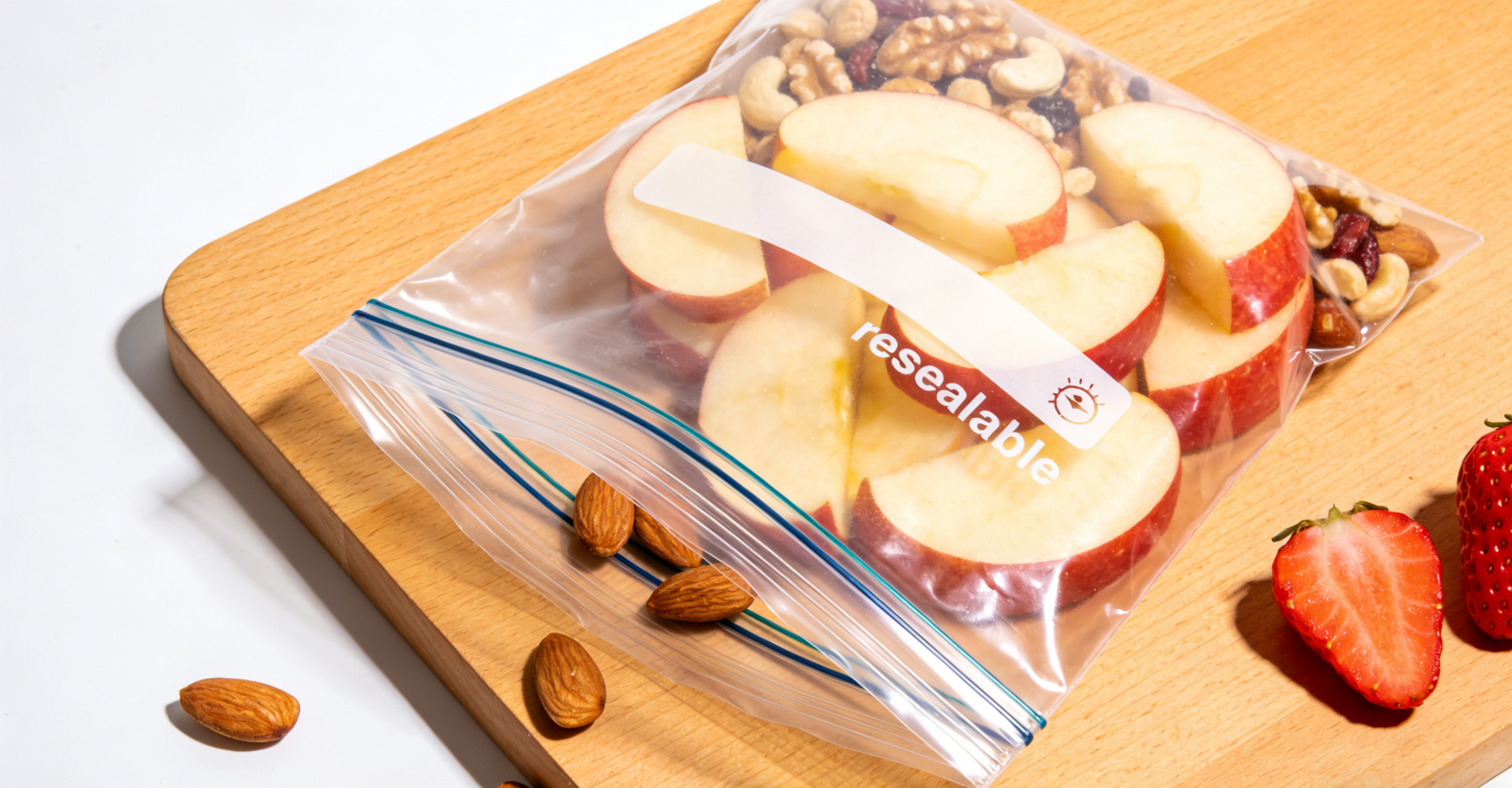
The manufacturer works with you to determine the exact bag size needed for your product volume and shape, whether that's a stand-up pouch, zip-lock bag, or spouted pouch.
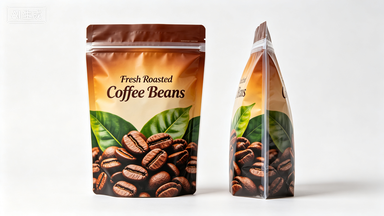
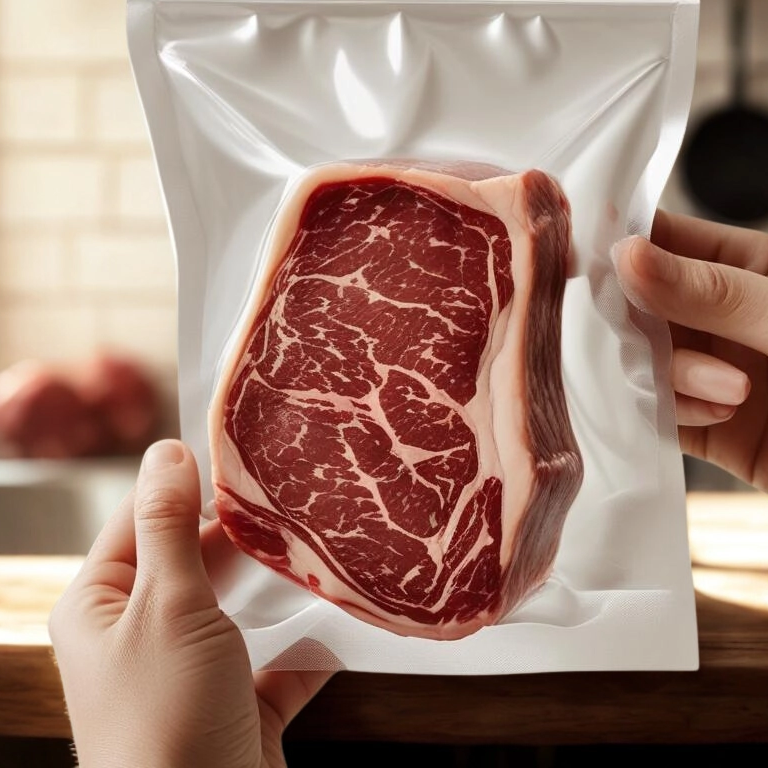
Based on the product (snacks, coffee, tea, pet food, or sauces), the appropriate film layers are chosen for barrier protection, seal strength, and shelf stability.
Structural and print design:
A design team develops the bag-structure design alongside brand color-print visuals in a single workflow, so structural and visual elements are coordinated rather than handled separately.
Prototypes are produced for review before a full production run begins.
Production and quality inspection:
Bags move through printing, lamination, and bag-making, with quality checks at multiple stages.
This kind of packaging customization tends to appeal to brands that want their bags to reflect a specific identity rather than looking like every other product on the shelf. Custom plastic bags built this way also tend to fit products more precisely, reducing wasted space and improving how the final package looks when filled.
How Do You Start a Custom Packaging Order?
Most manufacturers follow a similar intake process, though the level of design support varies. Generally, the process includes:
Submitting product details (weight, shape, storage conditions)
Receiving material and size recommendations from the supplier's team
Reviewing structural and print design mockups
Approving samples before full production
Confirming production timelines and shipping logistics
Working with a manufacturer that keeps design, materials, and production under one roof, rather than outsourcing pieces of the process to different vendors, tends to reduce back-and-forth communication and shortens the time between initial inquiry and finished packaging.
Who Benefits from Custom Food Packaging?
Both new and established food businesses have reasons to seek out customized packaging, though their priorities often differ.
Startups typically look for:
Startups typically look for:
Smaller order quantities to test a product in the market before scaling
Design support since they may not have an in-house creative team
Affordable material options that still meet food safety standards
Established brands typically look for:
Larger volume production runs with consistent quality across orders
Advanced barrier materials for products with longer shelf-life requirements
Precise color matching to maintain brand consistency across packaging lines
A supplier offering a pure-custom model can serve both groups from the same production infrastructure, since the underlying process, structure design, material selection, and printing, scales up or down based on order size rather than requiring an entirely different production line.
Finding the right source for custom plastic packaging bags comes down to identifying a manufacturer capable of tailoring dimensions, materials, and printing to your specific food product, rather than settling for generic stock options. A pure-custom model, like the one offered by Maixin Packaging, brings structural design and brand visuals together in one workflow, serving both startups placing their first orders and established brands scaling production. For businesses evaluating food plastic bag packaging options, reviewing material suitability by product type, confirming design and quality control capabilities, and understanding the full custom production process are practical steps toward finding a supplier that fits both current needs and future growth.